A seven-figure Amazon account looks healthy on the surface—strong sales velocity, steady revenue, "acceptable" ACoS. Then the profit and loss statement arrives, and the story changes.
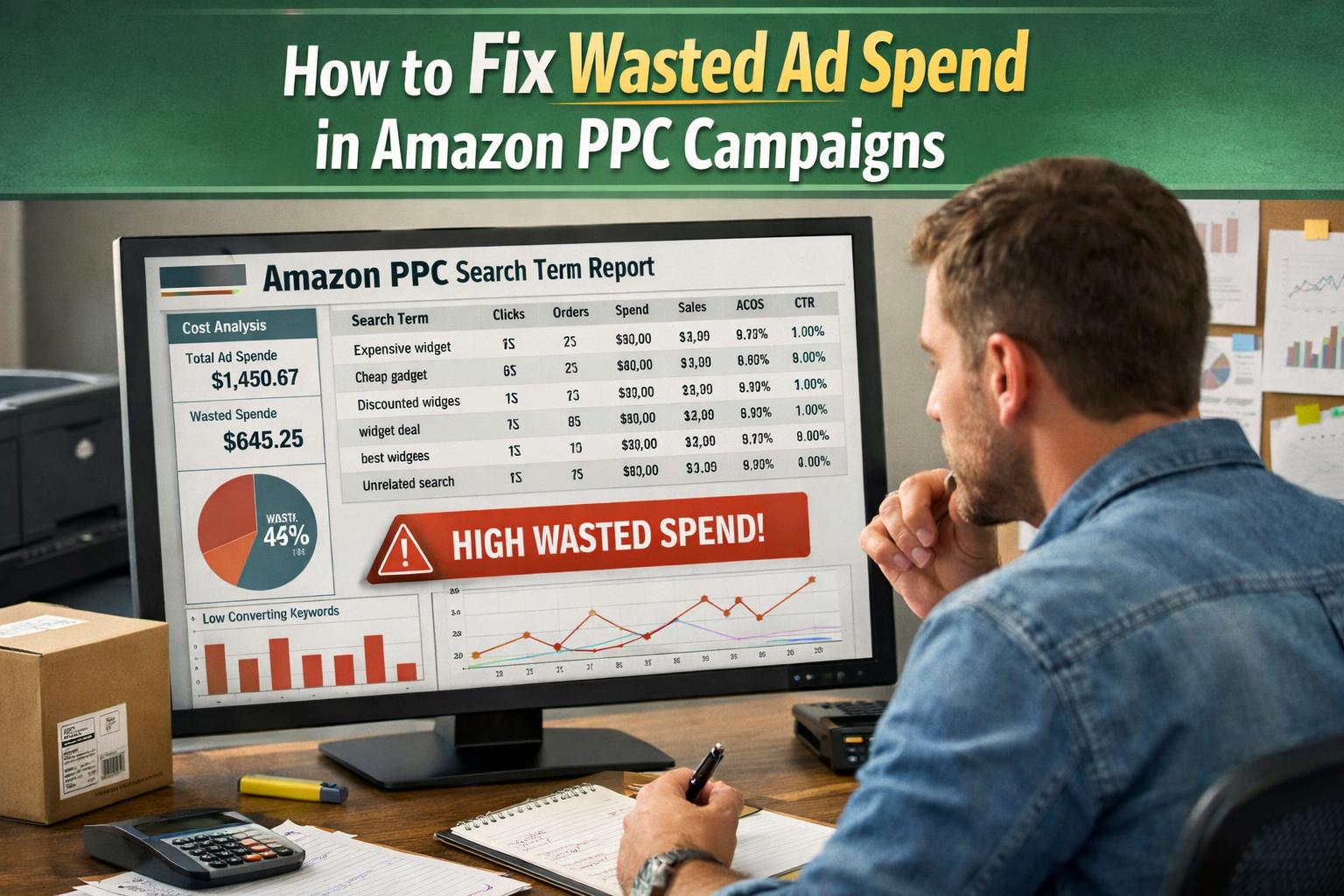
Scaling brands often discover that ad spend has quietly ballooned while contribution margin has shrunk. The campaigns that worked at $50k monthly ad spend start breaking at $150k. Complexity compounds. Mistakes get expensive. And somewhere in the account, thousands of dollars bleed out through search terms that have never converted a single sale.
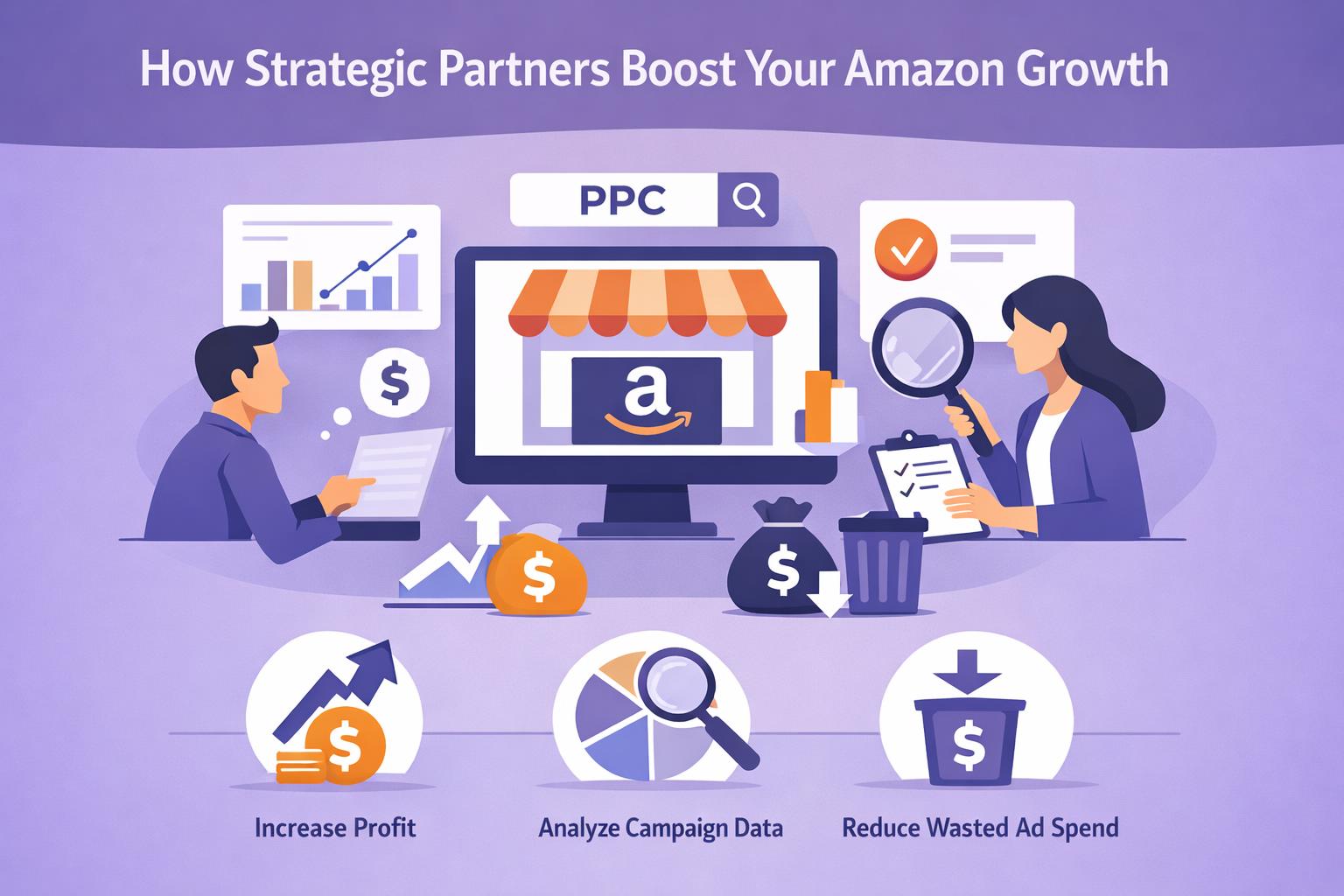
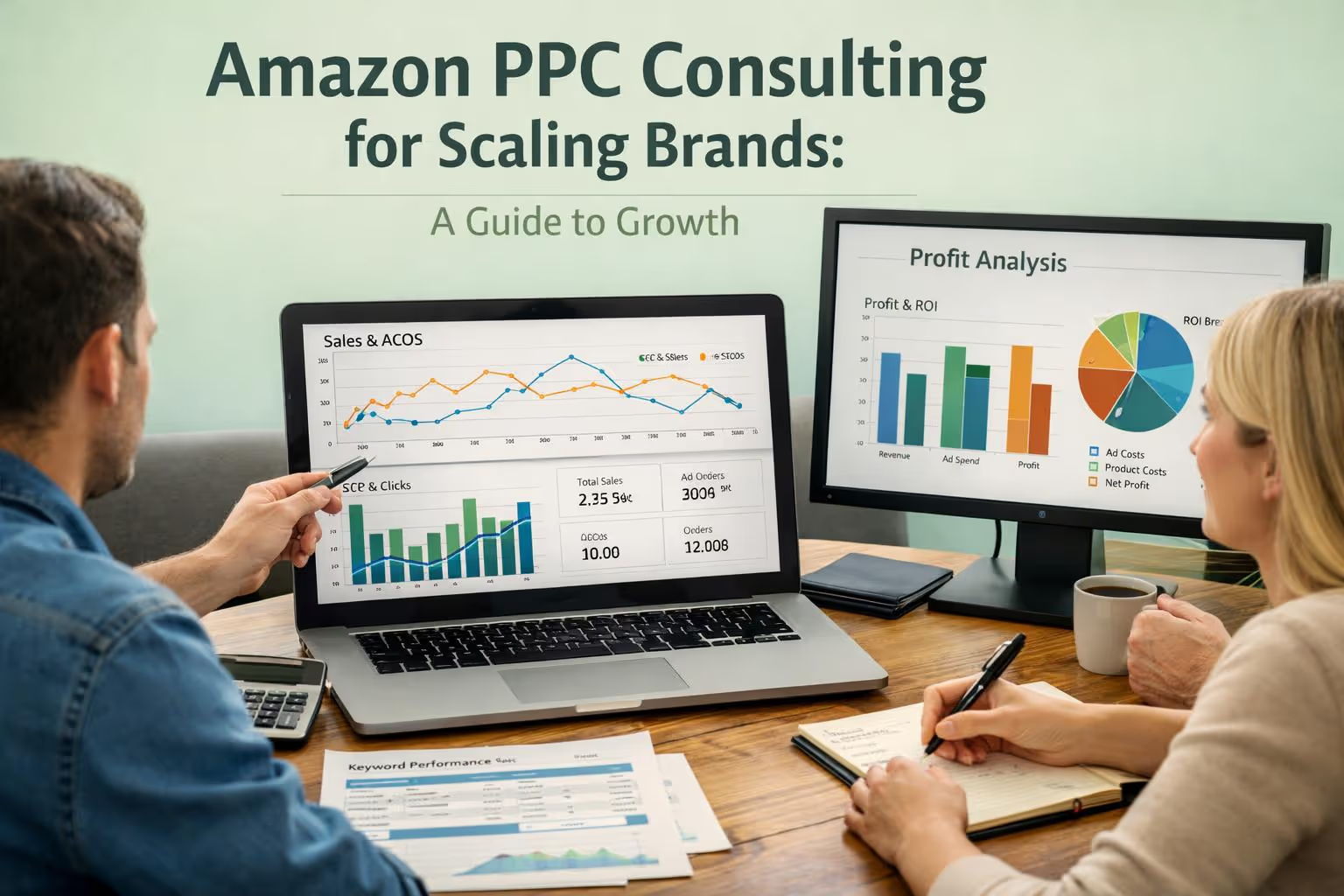
This is the gap Amazon PPC consulting exists to close. Not more dashboards or automation for automation's sake—real strategic oversight that turns ad spend into actual profit.
For brands scaling past seven figures who feel like they're working harder but keeping less, this guide breaks down exactly when consulting makes sense, what it should deliver, and how to evaluate whether a consultant is worth the investment.
When Scaling Brands Should Consider Amazon PPC Consulting
Not every brand needs outside help. But certain inflection points make consulting worth serious consideration.
The Current Setup No Longer Fits
Maybe the account started with a VA who "knows PPC." Maybe an agency treats it like one of 47 others on their roster. What worked at lower spend levels stops scaling efficiently. Campaign structures that seemed fine become tangled. Internal competition between campaigns drives up CPCs. Wasted spend hides in neglected auto campaigns.
TACoS Keeps Climbing Without Proportional Profit Growth
This is the classic scaling trap. Ad spend increases to maintain organic rank, but blended margins shrink. The advertising machine consumes more fuel without delivering proportional returns. A consultant who understands unit economics can diagnose the root cause rather than simply recommending higher bids [1].
New Market Entry Is on the Horizon
Launching in the UK, Germany, or Japan introduces variables that don't translate directly from U.S. strategy. Keyword landscapes differ. Competition behaves differently. Consumer purchasing patterns vary by marketplace. Trial-and-error learning in international markets can burn through significant budget before finding what works.
An Exit Is in the Planning Stages
Acquirers scrutinize advertising efficiency during due diligence. Clean campaign architecture with documented standard operating procedures signals operational maturity. Messy campaigns with unexplained spend patterns raise red flags and can affect valuation conversations [2].
Growth Has Plateaued for No Clear Reason
Sales flatten. Spend increases. Nothing moves the needle. This often signals structural problems in campaign architecture that no amount of bid optimization will fix. The issue isn't execution—it's strategy.
What Amazon PPC Consulting Actually Delivers
Generic agencies promise "optimization." Consultants worth their fee deliver specific, measurable outcomes tied to business objectives.
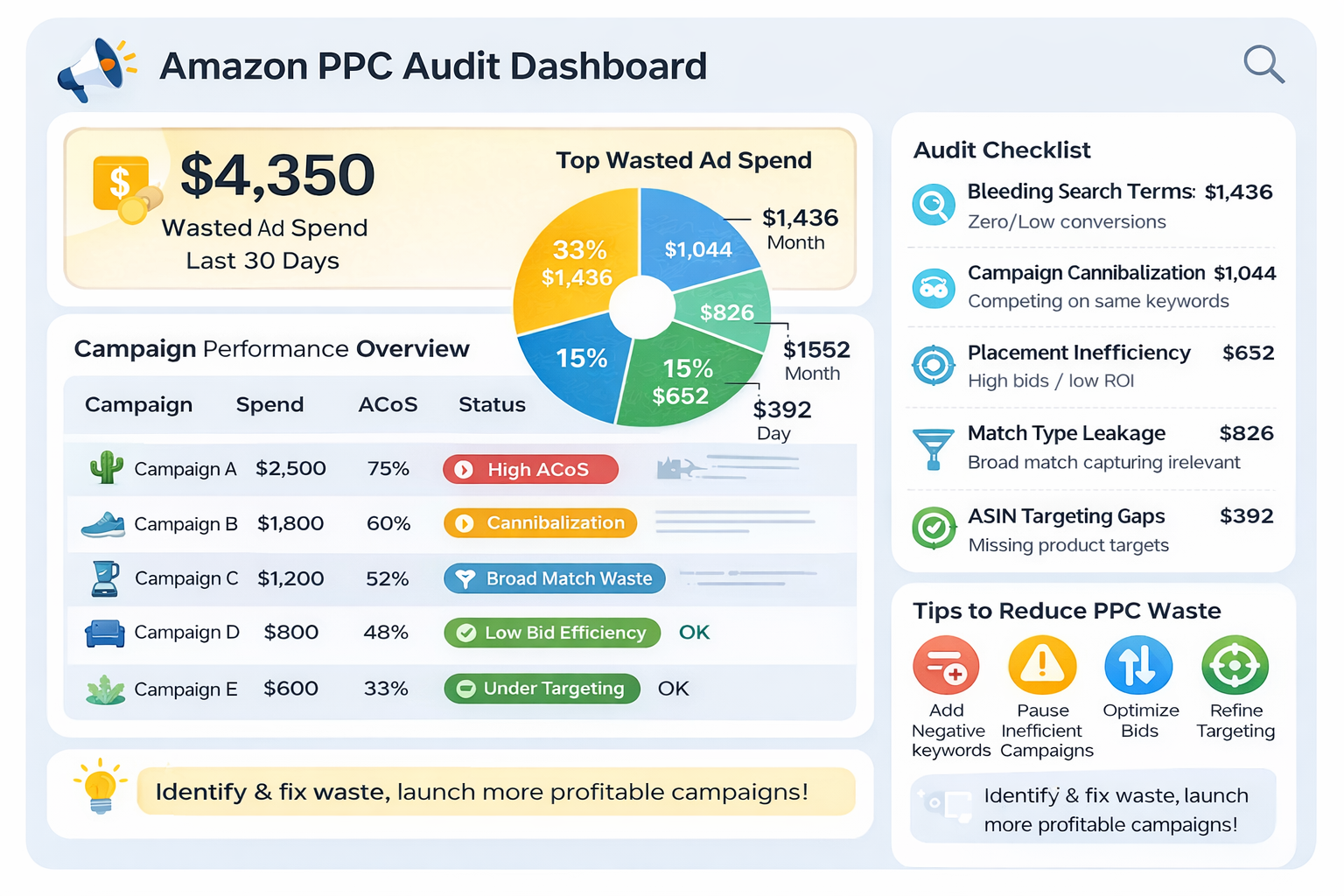
The PPC Audit: Finding Where Money Disappears
A proper audit isn't a spreadsheet export with surface-level observations. It's forensic accounting for ad spend—tracing every dollar to understand what's working, what's wasting, and what's missing.
What a thorough audit examines:
Bleeding search terms: Keywords consuming budget with zero or insufficient conversions over meaningful time periods
Campaign cannibalization: Multiple campaigns bidding against each other on the same search terms, artificially inflating CPCs
Placement inefficiency: Aggressive top-of-search bids on terms where the unit economics don't support premium positioning
Match type leakage: Broad match campaigns running without proper negative keyword mining, capturing irrelevant traffic
ASIN targeting gaps: Missing product targets, absent defensive campaigns, or competitor conquesting left unanswered
The audit process follows a systematic framework: identify waste, quantify the impact, prioritize fixes by profit potential. The Profit Feedback Loop systematizes this approach—launch with intent, prune wasted spend quickly, analyze TACoS and conversion rate together, then iterate.
The Strategic Roadmap: Architecture for Profitable Scaling
After the audit comes the roadmap—the plan for restructuring campaigns to support sustainable, profitable growth.
| Deliverable | What It Covers |
| Campaign Architecture Plan | Campaign types, interaction structure, budget allocation by objective |
| TACoS Targets by SKU | Margin-based targets tied to actual unit economics, not arbitrary percentages |
| Keyword Hierarchy Strategy | Exact vs. phrase vs. broad deployment by funnel stage and intent |
| Negative Keyword Library | Pre-built lists to prevent common waste patterns from day one |
| Scaling Triggers | Defined metrics that signal when a campaign is ready for increased spend |
| Profit Milestones | Monthly checkpoints tied to contribution margin, not vanity metrics |
The goal isn't achieving a specific ACoS number. The goal is maximum profit extraction from every advertising dollar spent [3].
Documentation and Standard Operating Procedures
This matters more than most sellers realize—and becomes critical during transitions.
What happens when a PPC manager leaves? When an agency relationship ends? When due diligence starts for a potential acquisition?
Quality consulting produces documented systems that outlive any individual:
Weekly optimization checklists with specific actions
Bulk file processes for negative keyword mining
Bid adjustment protocols with defined triggers
Search term review cadences and decision frameworks
The SOPs available on the PPC Maestro site demonstrate what this looks like in practice—repeatable processes that any competent operator can execute consistently.
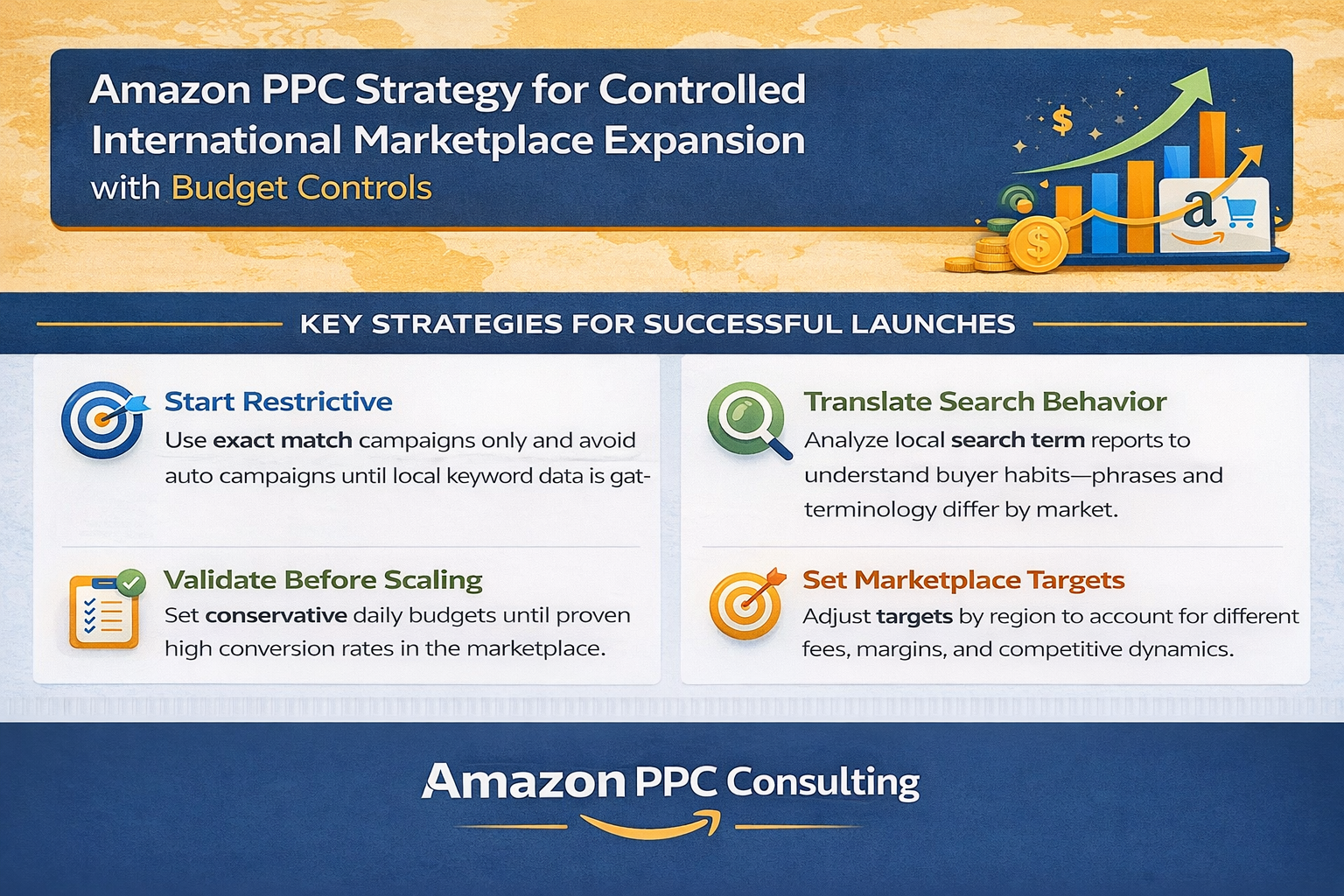
Strategies Consultants Use to Drive Profitable Growth
The tactics that move the needle for scaling brands go beyond basic bid management.
New Market Entry Without Burning Cash
International marketplace expansion is where significant money gets wasted. The assumption that U.S. strategy translates directly to other markets leads to expensive lessons.
What works for controlled international launches:
Start restrictive: Begin with exact match campaigns only. Avoid auto campaigns until the keyword landscape is understood.
Translate search behavior, not just keywords: Use search term reports to identify how local buyers actually search—phrasing and terminology differ by market.
Validate before scaling: Set conservative daily budgets until conversion rates prove out in the new marketplace.
Build marketplace-specific targets: Margins differ by region due to fees, shipping, and competitive dynamics. TACoS targets should reflect actual marketplace economics.
The discipline is patience—building data before scaling spend.
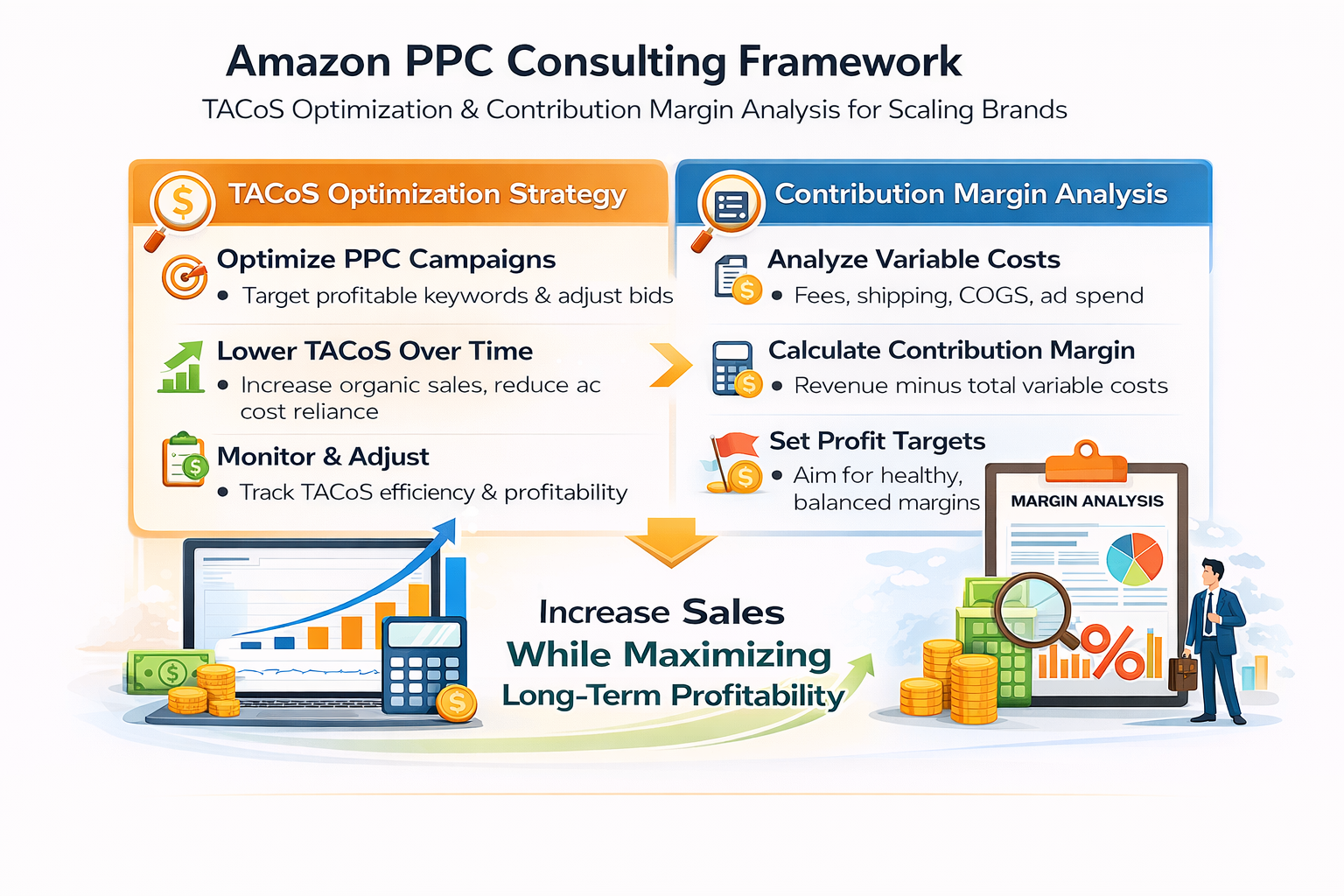
Automation That Serves Profit, Not Platform Goals
Amazon's automation tools are powerful. They're also built to optimize for Amazon's objectives, which don't always align with seller profitability [4].
Principles for profit-aligned automation:
Tie bid automation to contribution margin. ACoS guardrails alone can optimize toward sales that lose money.
Default to "down only" dynamic bidding until a campaign has proven profitable at baseline bids. "Up and down" can rapidly inflate costs on unproven terms.
Never automate budget increases beyond unit economics. If the math doesn't support higher spend, automation shouldn't push it there.
The value of automation is consistency and speed—but the parameters must reflect profit objectives, not just efficiency metrics.
Portfolio Architecture That Scales Cleanly
At seven-figure spend levels, campaign structure determines how effectively the account can grow.
Architectural principles:
Tiered campaigns by performance: Proven winners receive aggressive budgets with protected spend. Tests and experiments get limited exposure until they prove themselves.
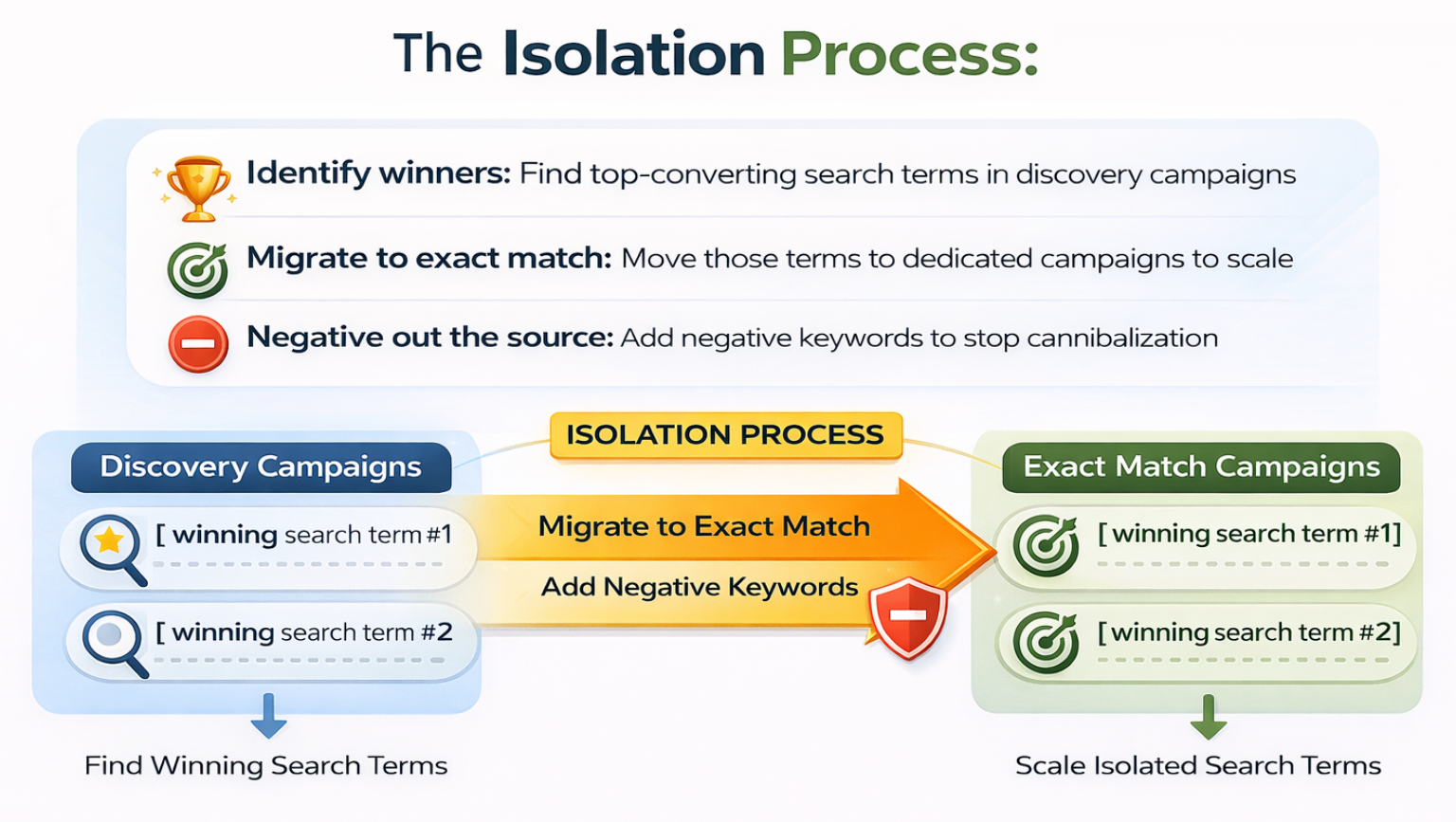
Search term isolation: High-performing search terms migrate from discovery campaigns (auto, broad) to dedicated exact match campaigns with controlled budgets.
Defensive positioning: ASIN targeting campaigns protect top listings from competitor conquesting.
Dayparting by conversion patterns: Reducing spend during hours with historically low conversion rates preserves budget for high-intent periods.
The architecture should make daily optimization obvious. Opening the account, the next action should be immediately clear.
Search Term Isolation: The Profit Engine
This is where compounding profit happens over time.
The isolation process:
Identify winners: Find search terms converting above the profit threshold in discovery campaigns
Migrate to exact match: Move those terms to dedicated campaigns with protected budgets and appropriate bids
Negative out the source: Add negative exact matches to the discovery campaigns to eliminate internal competition
Scale the winners: Increase bids and budgets on isolated terms while discovery campaigns continue finding new opportunities
This "promote and protect" cycle creates a constantly improving portfolio. The best performers get isolation and investment. Everything else stays in testing mode until it proves itself.
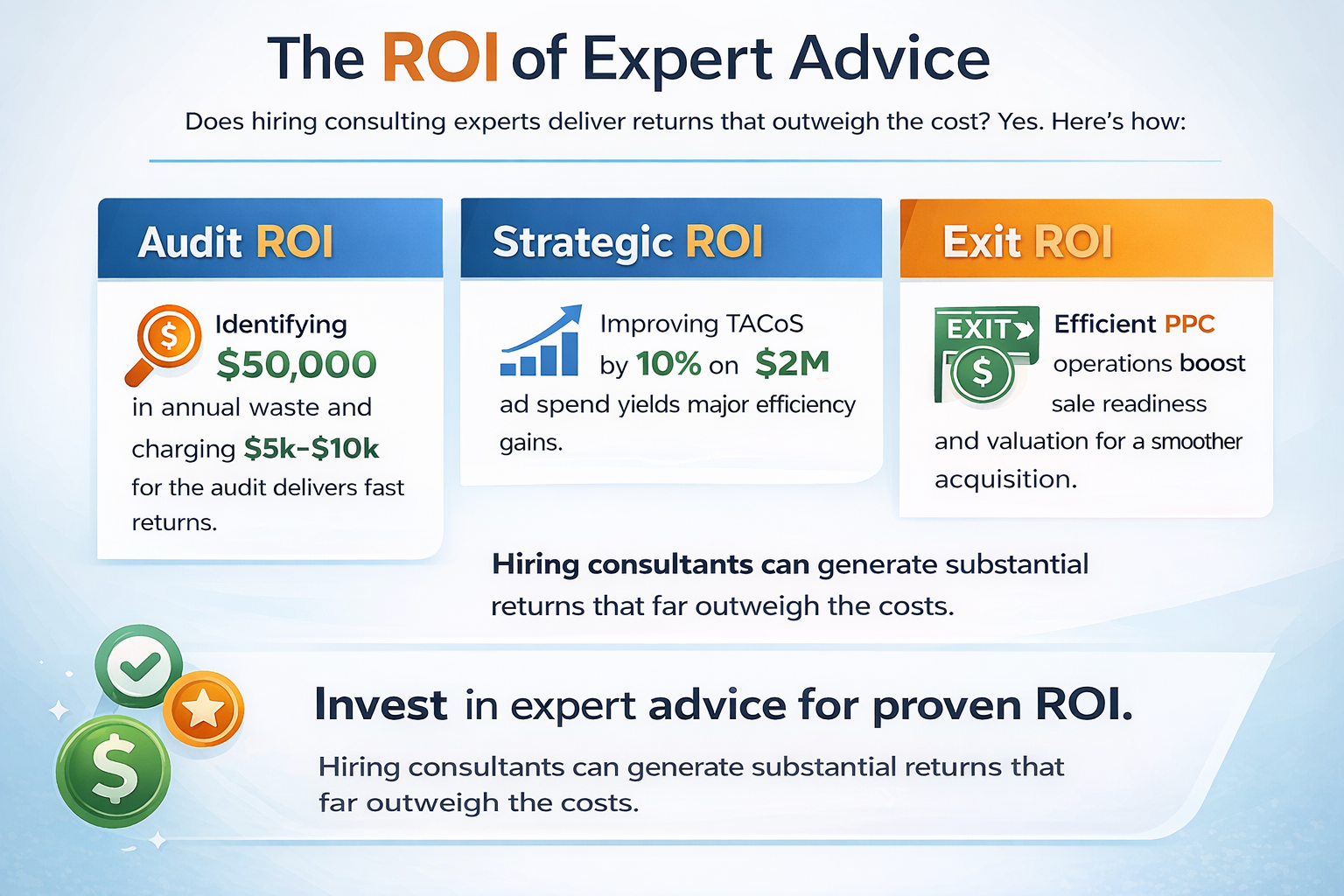
The ROI of Expert Advice
Consulting costs money. The question is whether it generates returns that exceed the investment.
Audit ROI
If a consultant identifies $50k in annual waste and charges $5k-$10k for the audit, the return materializes quickly—before they adjust a single bid. The Results page documents these kinds of outcomes across multiple accounts.
Strategic ROI
Proper campaign architecture can improve TACoS by meaningful percentages. On $2M in annual ad spend, even modest efficiency gains translate to substantial dollar amounts—either as savings or as reallocation to profitable growth.
Exit ROI
For brands planning an exit, clean PPC operations with documented SOPs signal operational maturity to acquirers. The due diligence process goes smoother when advertising efficiency is demonstrable and systems are transferable. While valuation impacts vary based on market conditions and deal specifics, advertising efficiency is consistently a factor acquirers examine [5].
What Consulting Won't Fix
Setting expectations matters:
Bad products: No amount of advertising expertise saves a product with poor reviews, weak differentiation, or insufficient demand
Broken listings: Campaigns drive traffic; listings convert it. Consulting can identify conversion problems but doesn't replace listing optimization
Inventory constraints: Aggressive advertising on products that stock out damages rank and wastes spend
Unrealistic timelines: Structural improvements take 30-60 days to implement. Profit impact typically materializes within 90 days as optimizations compound
Consulting accelerates what's already viable. It can't manufacture success from fundamentally broken businesses.
How to Evaluate a PPC Consultant
Not all consultants deliver equal value. Here's what separates genuine expertise from confident presentation.
They Speak in Profit, Not ACoS
If the first metric in the conversation is ACoS, that's a signal. TACoS, contribution margin, profit per click—these are the metrics that matter. ACoS can be manipulated in ways that hurt the business while looking good in reports.
They Show Process, Not Just Results
Screenshots of low ACoS are meaningless without context. What was the margin on those products? The spend level? The timeframe? What specific changes drove the improvement? Consultants who can explain their methodology demonstrate understanding, not just lucky outcomes.
They Have Documented Systems
Ad hoc optimization doesn't scale. Repeatable processes, frameworks, and documented SOPs indicate systematic thinking that transfers value beyond the consultant's direct involvement.
They Ask Hard Questions First
A consultant who jumps straight to campaign structure without understanding margins, inventory levels, and business objectives is skipping essential context. The tactics that make sense depend entirely on the strategic situation.
Ready to find out where your ad spend actually goes?
The Profit Feedback Loop framework has helped brands identify and eliminate wasted spend while maintaining or growing sales—not through complicated tactics, but through disciplined, profit-first systems.
Book a call to diagnose what's actually happening in your account.
Frequently Asked Questions
When should a scaling brand hire an Amazon PPC consultant versus an agency?
Consultants make sense when the need is strategic oversight and knowledge transfer—building systems that outlast the engagement. Agencies work better for ongoing execution when strategy is already clear. Brands scaling past $1M in annual ad spend often benefit from both: a consultant to set strategy and document SOPs, an agency or internal team to execute daily optimization.
How much does Amazon PPC consulting typically cost?
Quality consulting ranges from $2,500-$15,000+ depending on scope and complexity. Comprehensive audits with strategic roadmaps for seven-figure brands typically fall in the $5,000-$10,000 range. The ROI should exceed the investment within the first 90 days through waste elimination and efficiency improvements.
What's the difference between TACoS and ACoS, and why does TACoS matter more?
ACoS measures ad efficiency in isolation—ad spend divided by ad-attributed revenue. TACoS (Total Advertising Cost of Sales) measures ad spend against total revenue, including organic sales. TACoS reveals whether advertising is building sustainable growth or simply buying sales that might have happened anyway. It's the more complete picture.
How long before results from PPC consulting become visible?
Waste identification happens within the first week of audit work. Structural improvements take 30-60 days to fully implement as campaigns adjust and data accumulates. Profit impact typically becomes measurable within 90 days as optimizations compound and the new architecture stabilizes.
Can consulting help with Amazon business exit preparation?
Advertising efficiency is a due diligence focus for acquirers. Clean PPC structure, documented SOPs, and demonstrable TACoS trends signal operational maturity. Proper consulting creates the documentation and systems that make the diligence process smoother and demonstrate sustainable, transferable operations.
About PPC Maestro
PPC Maestro serves seven-figure Amazon sellers who are done watching profit disappear into poorly managed ad accounts. Founded by Bernard Nader, the agency operates on a core principle: profit-first PPC. Every strategy, SOP, and optimization decision ties back to contribution margin—not vanity metrics. The Profit Feedback Loop framework and documented SOPs systematize what most agencies leave to guesswork, helping brands reclaim wasted spend while scaling sustainably.
Cited Works
[1] Jungle Scout — "The State of the Amazon Seller Report." https://www.junglescout.com/amazon-seller-report/
[2] Marketplace Pulse — "Amazon Advertising Revenue and Growth." https://www.marketplacepulse.com/amazon/advertising
[3] Amazon Advertising — "Sponsored Products Campaign Management." https://advertising.amazon.com/solutions/products/sponsored-products
[4] Amazon Advertising — "Dynamic Bidding Strategies." https://advertising.amazon.com/API/docs/en-us/guides/sponsored-products/campaigns
[5] Helium 10 — "Understanding Amazon PPC Metrics." https://www.helium10.com/blog/amazon-ppc-metrics/