Last week, I got on a call with a seller who burned $47,000 in Q4.
Not invested. Not allocated. Burned.
He panicked when Black Friday traffic spiked, tripled his daily budgets overnight, and watched his TACoS explode to 38%. By the time he pulled back, the damage was done. Profit margin? Gone. Holiday "win"? A loss.
This isn't an outlier. I see it constantly—7-figure sellers running reactive PPC like they're playing whack-a-mole with Amazon's shopping events.
Prime Day hits. Scramble.
Q4 arrives. Panic.
Spring event announced. "Wait, there's a spring event?"
Here's the truth: every dollar of wasted seasonal ad spend is a planning failure, not an execution failure.
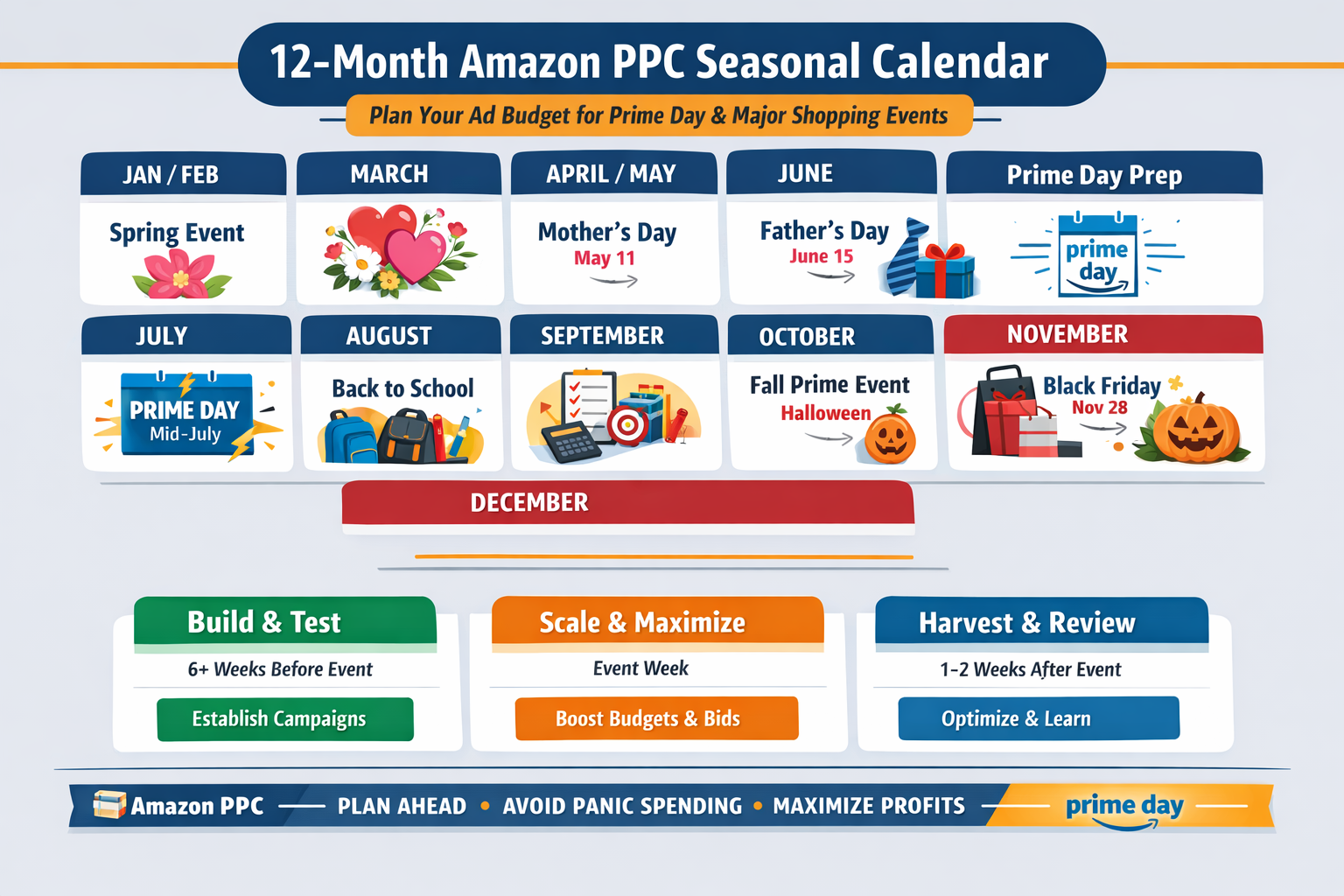
The sellers who consistently win Prime Day, crush Q4, and maintain healthy TACoS year-round aren't smarter. They're not running secret campaigns. They have a 12-month Amazon PPC seasonal calendar—and they built it months ago.
This guide gives you the complete framework to plan your ad budget across every major 2025-2026 shopping event. No more scrambling. No more budget surprises. No more lighting money on fire because you didn't see an event coming.
Why Reactive PPC Destroys Profit (And How Planning Fixes It)
Most Amazon sellers treat PPC like an emergency response system.
Traffic spikes? Raise budgets.
Sales slow down? Cut spend.
New event announced? Throw money at it and hope.
This reactive approach creates three profit-killing problems:
Problem 1: You pay premium prices for last-minute positioning.
Amazon's algorithm rewards campaigns with established sales history and click-through relevance. When you launch campaigns the week of Prime Day, you're competing against sellers who've been building that relevance for six weeks. You'll pay significantly more per click just to show up—and your conversion rates will suffer because Amazon doesn't trust your new campaigns yet.
Problem 2: You make emotional budget decisions.
I audited an account last month where the seller increased their Prime Day budget by 400% the day before the event. Why? "Everyone said Prime Day was huge." No analysis. No margin calculation. No plan. Result: $23,000 in ad spend, 14% ACoS on paper—but when we calculated true contribution margin, they lost money on 60% of those sales.
Problem 3: You can't coordinate inventory, listings, and ads.
PPC doesn't exist in a vacuum. If you're running aggressive Sponsored Products campaigns but your inventory runs out mid-event, you've wasted every dollar spent building momentum. Planning your PPC calendar forces you to align ads with inventory projections and listing optimization—the trifecta that actually drives profitable growth.
The fix is stupidly simple: build your 12-month calendar now.
Sellers who use event-adjusted PPC planning consistently outperform reactive advertisers. That's the difference between scaling profitably and scrambling to break even.
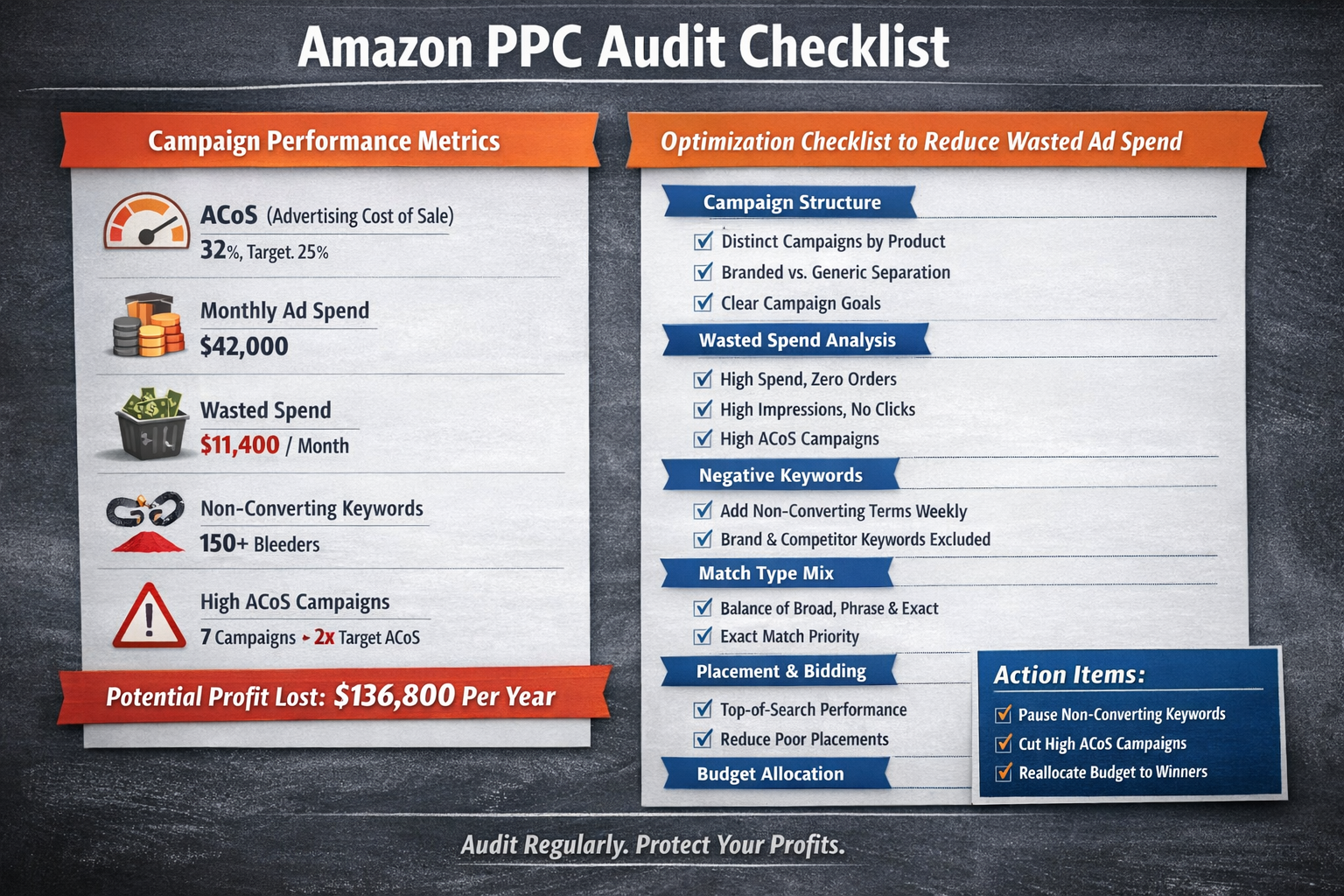
Ready to see where your seasonal budget is leaking? The PPC Maestro free audit breaks this down product by product.
The Complete 2025-2026 Amazon Shopping Event Calendar
Here's every major event you need to plan for, with timing and strategic notes. Bookmark this—you'll reference it constantly.
| Event | Timing | Competition Level | Strategic Priority |
| Spring Shopping Event | Mid-March | Low-Medium | High (testing opportunity) |
| Mother's Day | May 11, 2025 | Medium | Category-dependent |
| Father's Day | June 15, 2025 | Medium | Category-dependent |
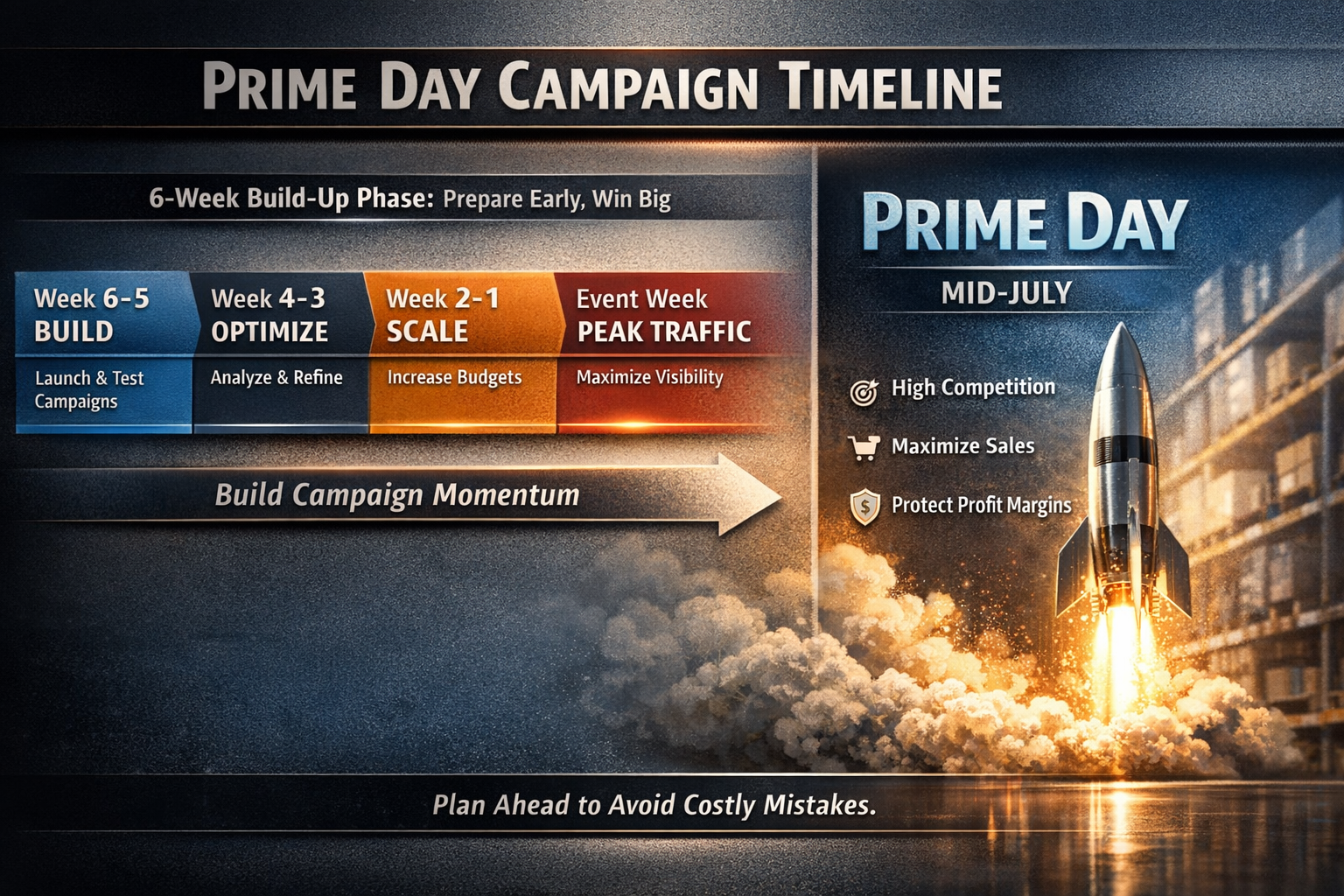
| Prime Day | Mid-July | Very High | Critical (plan 6+ weeks out) |
| Back-to-School | Late July–August | High | Category-dependent |
| Fall Prime Event | October | Medium | High (Q4 warm-up) |
| Halloween | October 31 | Medium | Category-dependent |
| Black Friday | November 28, 2025 | Extreme | Critical |
| Cyber Monday | December 1, 2025 | Extreme | Critical |
| Holiday Season | December 1–24 | Extreme | Critical |
Not all events are created equal.
Prime Day and Q4 (Black Friday through December) get all the attention. But smart sellers know the real opportunities often hide in lower-competition windows.
The Spring Shopping Event and Fall Prime Event typically see considerably less advertiser competition than July Prime Day. Same motivated buyers. Same deal-seeking behavior. Far cheaper clicks.
I tell my clients to use these "secondary" events as testing grounds. Launch new Sponsored Products campaign structures, test Sponsored Brands video creative, and identify winning keywords—all at a fraction of the CPC you'd pay in July or November.
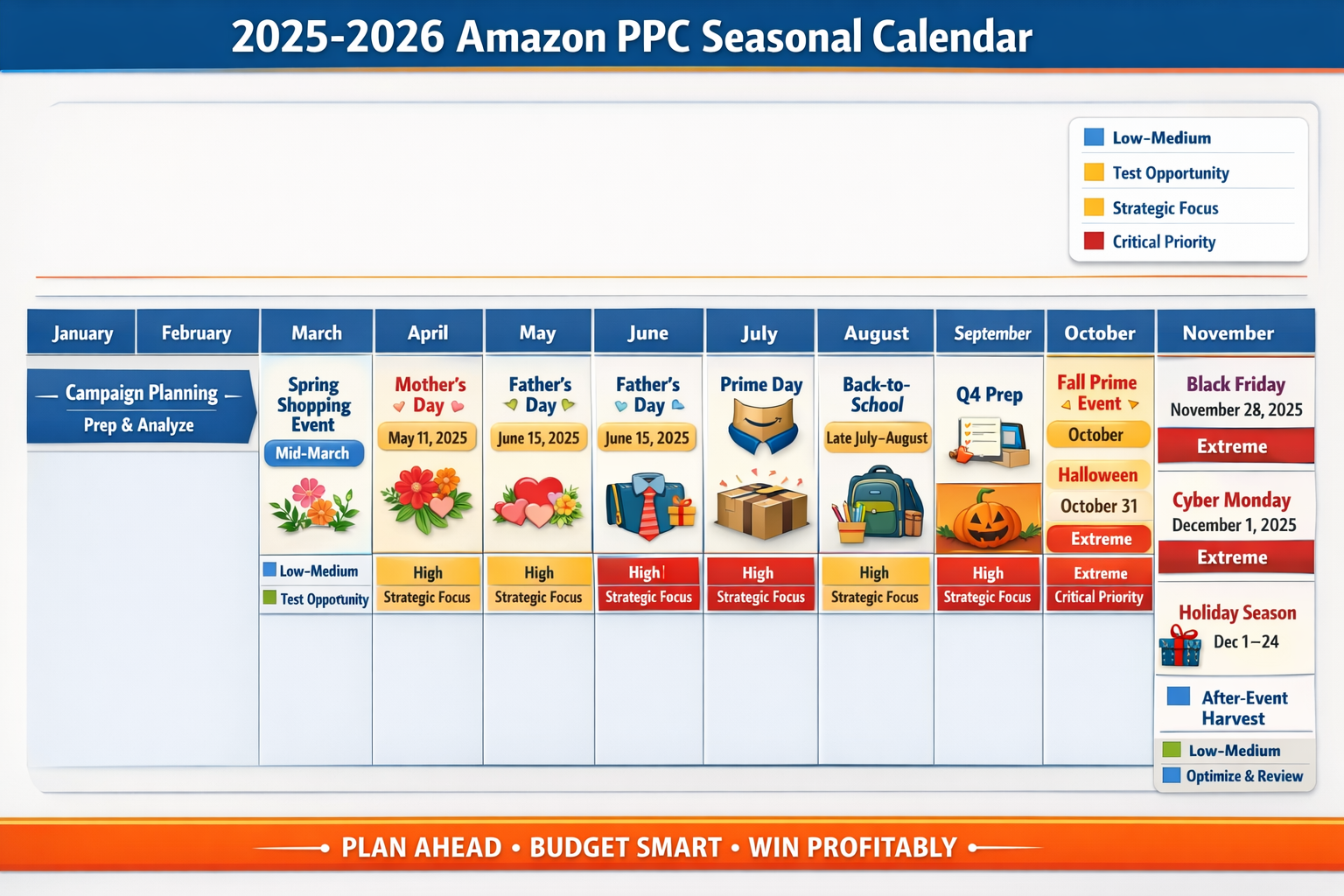
The 4-Phase Seasonal PPC Strategy That Actually Works
Winning seasonal PPC isn't about spending more during events. It's about spending smarter in the weeks before, during, and after.
Here's the framework I use with every client:
Phase 1: Build (6-4 Weeks Before Event)
Goal: Establish campaign relevance and accumulate data.
For Sponsored Products:
Launch or reactivate seasonal campaigns with conservative bids (start 15-20% below your target)
Focus on exact match keywords with proven conversion history
Build negative keyword lists aggressively—filter your search term reports and add any irrelevant terms (e.g., negative "Christmas" in January campaigns, negative "gift" for non-giftable products)
For Sponsored Brands:
This is prime time to test video creative before spend scales
Launch 2-3 headline variations to identify winners
Use this phase to build brand awareness at lower CPCs
This is where most sellers fail. They wait until two weeks out and wonder why their campaigns underperform. Amazon's algorithm needs time to learn your campaign. Give it that runway.
Phase 2: Optimize (4-2 Weeks Before Event)
Goal: Identify winners and eliminate waste.
Sponsored Products focus:
Review search term reports weekly (not daily—you need statistical significance)
Shift budget toward campaigns and keywords with strong contribution margin
Increase bids gradually on proven performers (5-10% per week)
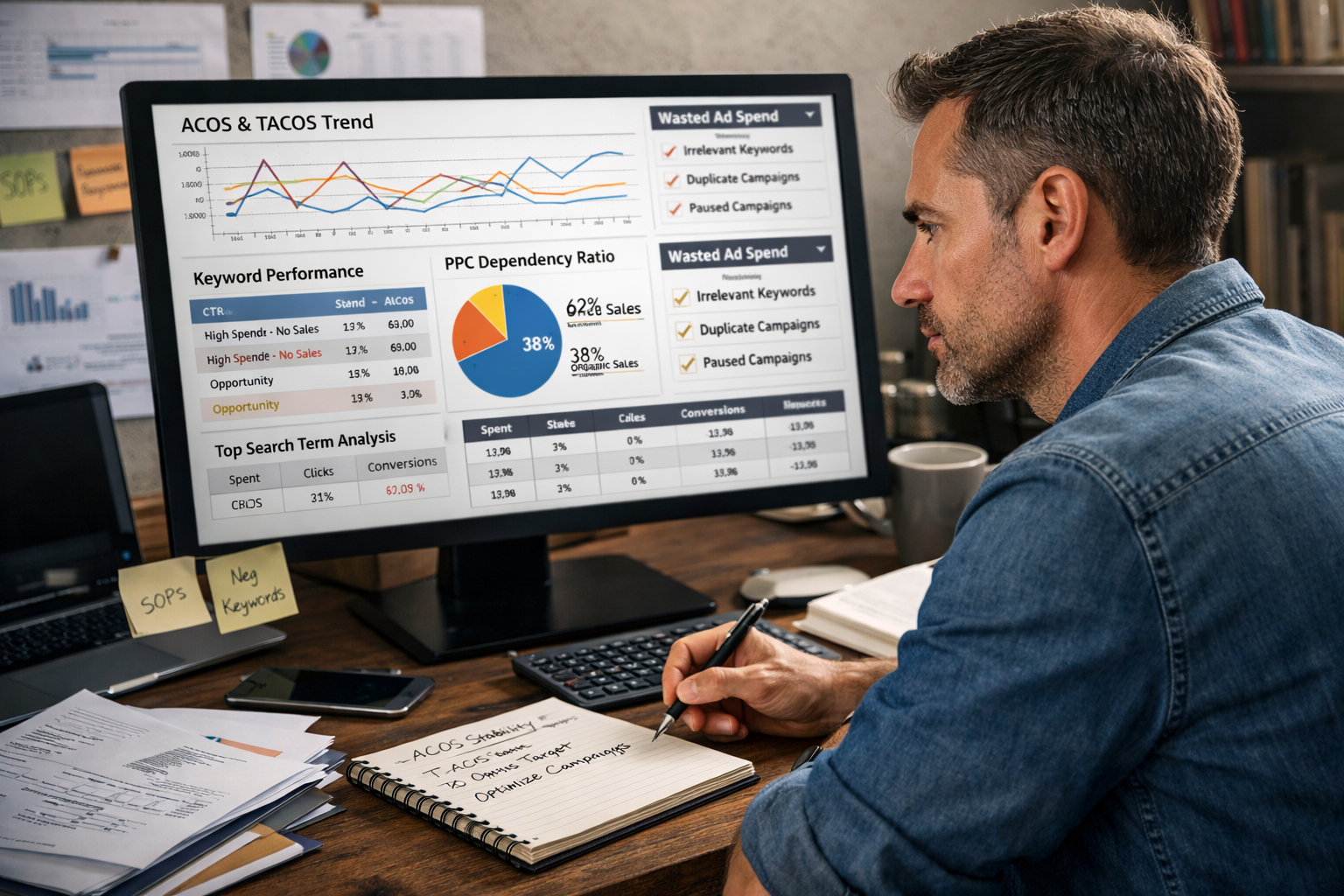
Cut bleeders ruthlessly—any keyword spending without converting gets paused or negatived using our Cutting Bleeders SOP
Sponsored Brands focus:
Double down on winning video creative
Pause underperforming headline variations
Test storefront landing pages vs. product detail pages
This phase is about cutting wasted spend before you scale. Every dollar you waste here costs you 3x during the event itself.
Phase 3: Scale (Event Week)
Goal: Maximize profitable visibility during peak traffic.
Sponsored Products:
Increase daily budgets 2-3x on winning campaigns (not 4-5x—controlled scaling)
Raise bids on top performers by 15-25% to defend position
Monitor hourly during first day of event—adjust if CPCs spike beyond profitable thresholds
Sponsored Brands:
Push proven video creative with increased budgets
Consider Sponsored Brands video for category-level visibility
Storefront traffic peaks during events—ensure your brand story is ready
Sponsored Display:
Retarget recent viewers who didn't purchase
Use product targeting on competitor ASINs seeing event traffic
Critical across all ad types: Mobile optimization is non-negotiable. The majority of Prime Day and Q4 shopping happens on mobile devices. Ensure your creative, listings, and storefronts render properly.
Critical rule: Never chase rank at the expense of profit. If CPCs spike beyond your break-even threshold, let competitors burn their money while you maintain margin.
Phase 4: Harvest (1-2 Weeks After Event)
Goal: Capture residual traffic at lower CPCs.
Reduce bids back toward baseline (but don't cut entirely—traffic remains elevated)
Analyze full event performance against TACoS and contribution margin targets
Document learnings for next event cycle
Maintain winning Sponsored Products campaigns for ongoing organic rank benefits
Keep Sponsored Brands running to capture brand search traffic from new customers
Most sellers shut everything down the day after an event ends. That's a mistake. Traffic remains elevated for 7-14 days post-event, and CPCs drop significantly as competitors pull back. This is often the most profitable window of the entire event cycle.
How to Allocate Your Seasonal PPC Budget (Without Guessing)
"How much should I spend?" is the wrong question.
The right question: "What's my profitable ceiling for this event?"
Here's how I calculate it with clients:
Step 1: Project event revenue by product.
Based on historical performance (or conservative estimates for new products), estimate total sales for each SKU during the event window.
Step 2: Calculate your contribution margin.
After COGS, FBA fees, and variable costs—what's left? If your contribution margin is 35%, you have 35 cents per dollar to work with.
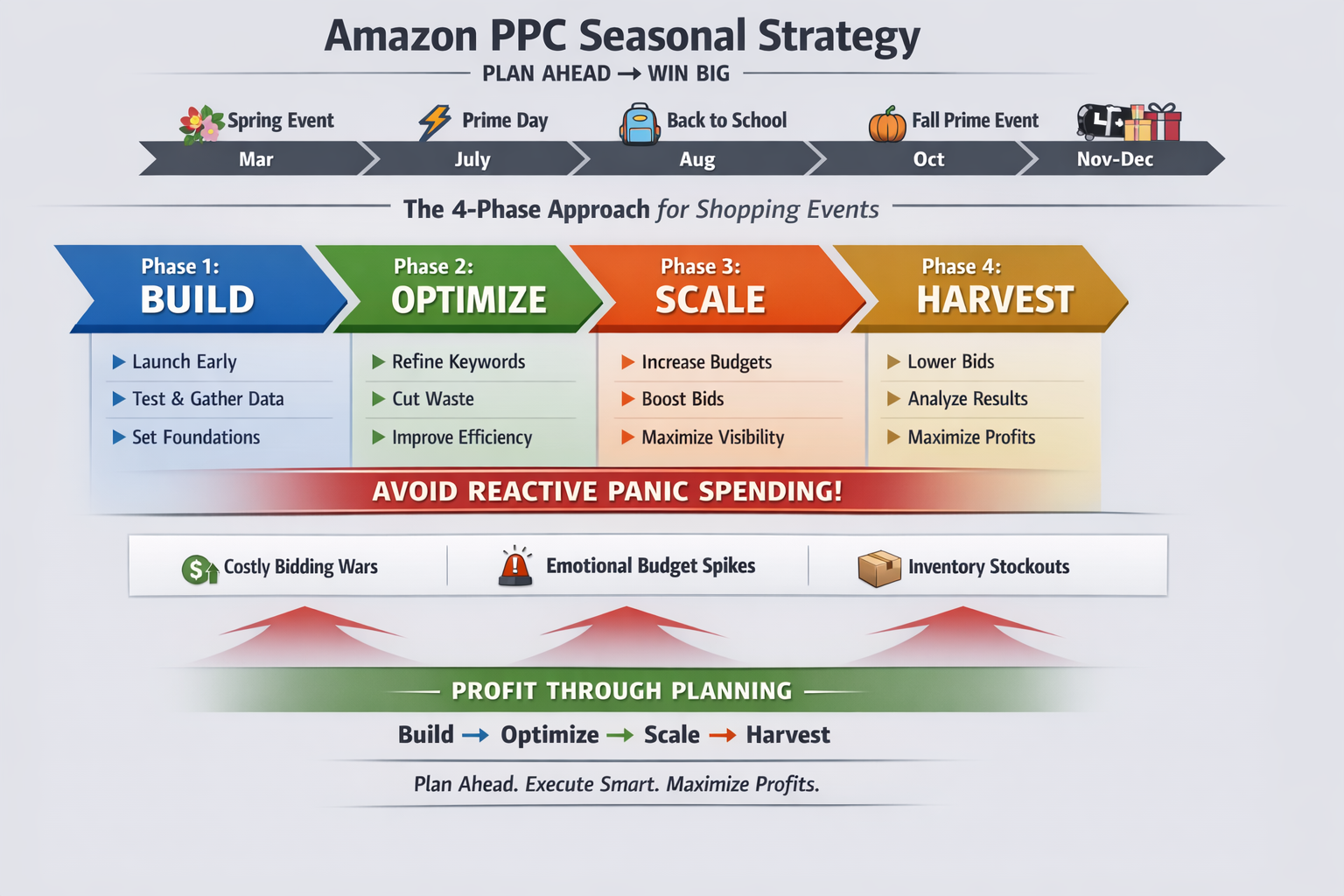
Step 3: Set your TACoS target by margin tier.
| Contribution Margin | Maximum TACoS | Risk Level |
| 40%+ | 15-20% | Comfortable |
| 30-40% | 10-15% | Moderate |
| 20-30% | 8-12% | Tight |
| Under 20% | Under 8% | Danger zone |
Step 4: Back into your budget.
Example calculation:
Expected Prime Day revenue: $50,000
Average contribution margin: 30%
Target TACoS: 12%
Maximum ad budget: $6,000
This isn't arbitrary. It's math. And it prevents the emotional overspending that destroys Q4 profits.
General allocation guidance: Most profitable seasonal advertisers allocate 25-35% of expected event revenue to advertising during major events. But this is a ceiling, not a target. Spend less if you can maintain rank. Spend more only if data shows incremental profit.
Build in a buffer for CPC spikes. During peak events, CPCs typically rise 10-20% above baseline. If your budget assumes normal CPCs, you'll run out mid-event or blow past profitable thresholds.
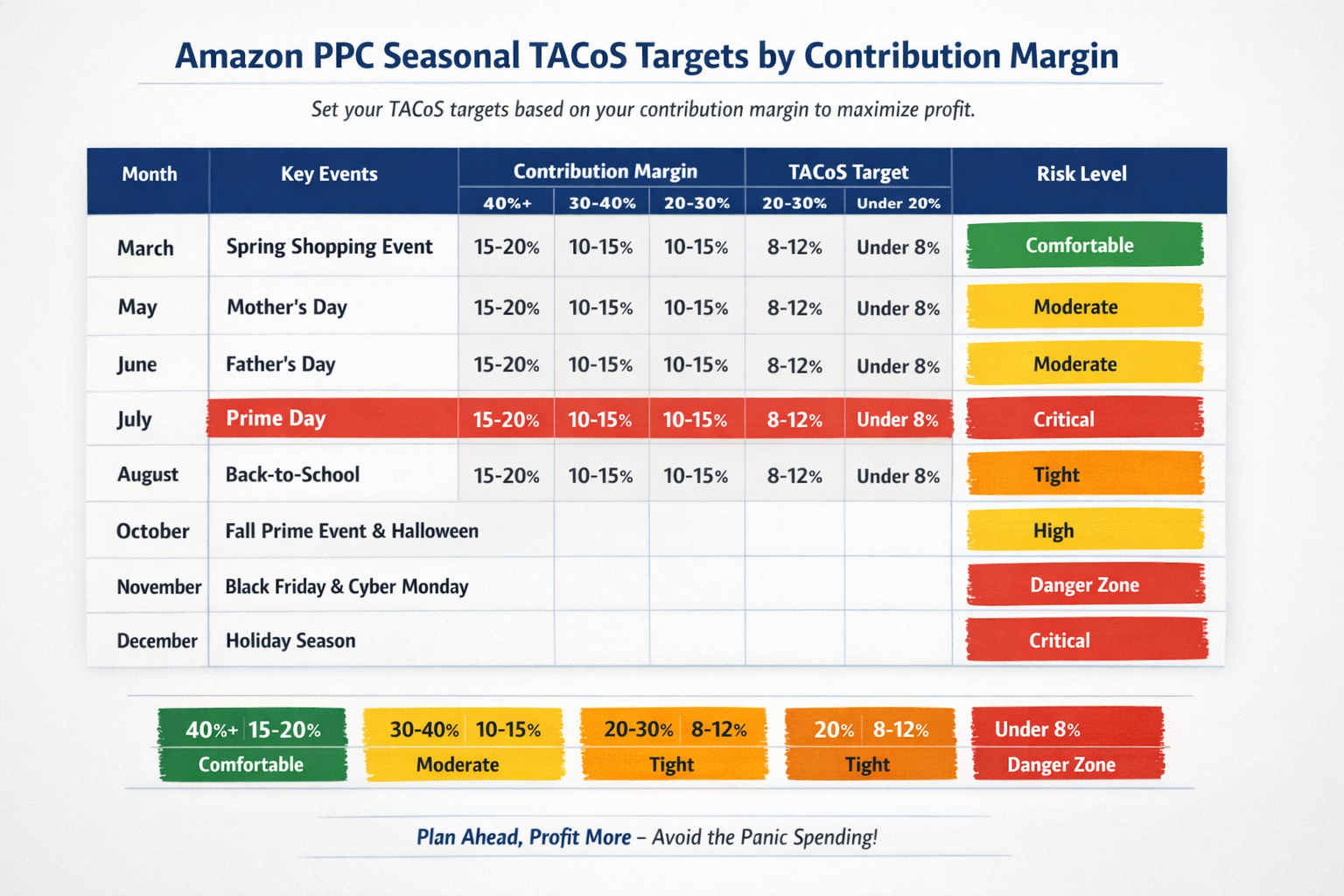
Month-by-Month Planning: Your 12-Month Amazon PPC Calendar
Here's how to structure your year for maximum profit and minimum panic:
Q1: The Foundation (January–March)
January–February: Foundation Setting
Analyze full prior year performance (what events drove profit vs. vanity sales?)
Set annual TACoS targets by product margin tier
Build your 12-month calendar with budget allocations by event
Audit and restructure campaign architecture for the year ahead
Single most important action: Document your profit-per-event from last year
March: Spring Shopping Event
Campaign launch: Late February
Peak spend: Event days (typically 2-4 days mid-March)
Strategy: Test new Sponsored Products keywords and Sponsored Brands video at lower CPCs
Budget allocation: 15-20% of your Prime Day planned budget
Single most important action: Use this as your testing ground for Q2/Q3 campaigns
Q2: The Ramp (April–June)
April: Transition Month
Review Spring event learnings
Begin Mother's Day campaign setup if relevant to your category
Maintain baseline campaigns; no major budget changes
Single most important action: Apply Spring learnings to campaign structure
May: Mother's Day
Campaign launch: Mid-April
Peak spend: May 1-11
Strategy: Giftable product focus; consider Sponsored Display for browsing audiences
Budget allocation: Category-dependent (skip if not relevant)
Single most important action: Test gift-oriented ad copy for Q4
June: Father's Day + Prime Day Prep
Father's Day follows same structure as Mother's Day (peak June 1-15)
Critical: Begin Prime Day campaign setup by June 1
Build negative keyword lists from Q1-Q2 search term data
Test Sponsored Brands video variations before July
Single most important action: Launch Prime Day campaigns with conservative bids
Q3: Prime Time (July–September)
July: Prime Day
Campaign launch: Early June (minimum 4-6 weeks prior)
Peak spend: Event days (typically 48 hours mid-July)
Strategy: Defend profitable positions; don't chase unprofitable rank
Budget allocation: One of your two largest event investments
Single most important action: Monitor hourly on day one; cut bleeders fast
August: Back-to-School
Campaign launch: Mid-July (runs parallel to Prime Day for relevant categories)
Peak spend: Late July through mid-August
Strategy: Category-specific (office supplies, electronics, dorm items)
Budget allocation: Category-dependent
Single most important action: Capture Prime Day momentum for related products
September: Q4 Preparation
This is your most important planning month
Audit all campaigns; eliminate underperformers before Q4 spend scales
Build Q4-specific Sponsored Products and Sponsored Brands campaign structures
Coordinate with inventory team on stock levels through December
Single most important action: Complete full campaign audit using the Profit Feedback Loop
Q4: The Main Event (October–December)
October: Fall Prime Event + Halloween
Fall Prime Event: Treat as Prime Day dress rehearsal—lower competition, similar buyer intent
Halloween: Category-specific (begin campaigns mid-September)
Strategy: Final optimization before Black Friday; lock in winning keywords and creative
Single most important action: Finalize your Q4 campaign structure—no major changes after October
November: Black Friday / Cyber Monday
Campaign launch: October 1 (minimum 6-8 weeks prior for Q4)
Peak spend: November 25-December 1
Strategy: Highest-competition window of the year—profit protection is critical
Budget allocation: Your largest event investment alongside December
Single most important action: Set hard budget caps based on contribution margin, not competitor activity
December: Holiday Season
Peak spend: Continues through December 20-22 (shipping cutoffs)
Strategy: Monitor inventory daily; pause campaigns if stock runs low
Don't abandon campaigns after Christmas—January clearance traffic remains strong
Single most important action: Maintain profitability through shipping cutoff dates
The Real Competitive Advantage: Profit-First Seasonal Planning
Most sellers will read this, nod along, and do nothing.
They'll react to Prime Day when Amazon announces it. They'll scramble in October when Q4 arrives. They'll burn money they didn't need to spend.
The sellers who build this calendar—who allocate budgets based on contribution margin, who launch campaigns six weeks early, who treat Spring events as testing grounds—they're the ones who scale profitably.
And they're the ones whose businesses are actually worth something when it's time to exit.
Seasonal PPC isn't about spending more during events.
It's about spending right because you planned ahead.
If you want help building your 12-month calendar with profit-backed budget allocations, book a free strategy call. We'll walk through your specific product margins, historical event performance, and show you exactly where your seasonal profit opportunities are hiding.
Frequently Asked Questions
How far in advance should I start Prime Day campaigns?
Launch Prime Day campaigns at minimum 4-6 weeks before the event. This gives Amazon's algorithm time to establish your campaign's sales history and click-through relevance. Start with conservative bids (15-20% below target), focus on exact match keywords for Sponsored Products, and test Sponsored Brands video creative. Sellers who wait until the week before pay considerably higher CPCs and see worse conversion rates because their campaigns lack established performance data.
What percentage of revenue should I spend on PPC during major events?
Profitable seasonal advertisers typically allocate 25-35% of expected event revenue to advertising during major shopping events. However, this should be calculated based on your actual contribution margin and TACoS targets—not arbitrary percentages. A product with 40% margins can sustain 15-20% TACoS, while one with 25% margins needs to stay under 12%. Always back into your budget from profit, not from revenue targets.
Are Spring and Fall Prime Events worth the investment?
Absolutely—and they're often more profitable than July Prime Day for sophisticated sellers. Competition is notably lower during these secondary events, which means cheaper CPCs and better visibility for both Sponsored Products and Sponsored Brands. Use Spring and Fall events to test new campaign structures, identify winning keywords, and build momentum before the high-competition windows of summer and Q4.
How do I prevent budget blowout during Black Friday/Cyber Monday?
Set hard daily budget caps based on your profitable TACoS threshold—not your competitors' spending. Build in a 10-20% buffer for CPC spikes. Monitor campaigns hourly during the first day of the event and adjust quickly if CPCs exceed profitable thresholds. Use the Reducing High ACoS SOP to identify and cut bleeders fast. Remember: letting competitors overspend while you maintain margins is a winning strategy.
Should I pause campaigns between major shopping events?
No—maintain baseline campaigns year-round to preserve relevance and organic rank benefits. However, you should significantly reduce budgets during transition months (April, September) and focus spend on proven Sponsored Products performers only. The goal is continuous optimization, not stop-start spending that forces you to rebuild momentum before every event.
About PPC Maestro
PPC Maestro is a profit-first Amazon PPC agency serving 7-figure private label sellers. Founded by Bernard Nader, our approach centers on the Profit Feedback Loop—a system designed to cut wasted spend, reallocate to winners, and protect contribution margin. Bernard regularly shares PPC strategies and audit breakdowns on YouTube and at Amazon seller conferences. Our framework, SOPs, and case studies are built from managing millions in ad spend for sellers focused on sustainable profit growth, not vanity metrics.
Works Cited
[1] Amazon Advertising — "Sponsored Products Best Practices." https://advertising.amazon.com/library/guides/sponsored-products-best-practices
[2] Jungle Scout — "The State of the Amazon Seller Report." https://www.junglescout.com/amazon-seller-report/
[3] Ad Badger — "Amazon Advertising Benchmarks." https://www.adbadger.com/blog/amazon-advertising-benchmarks/