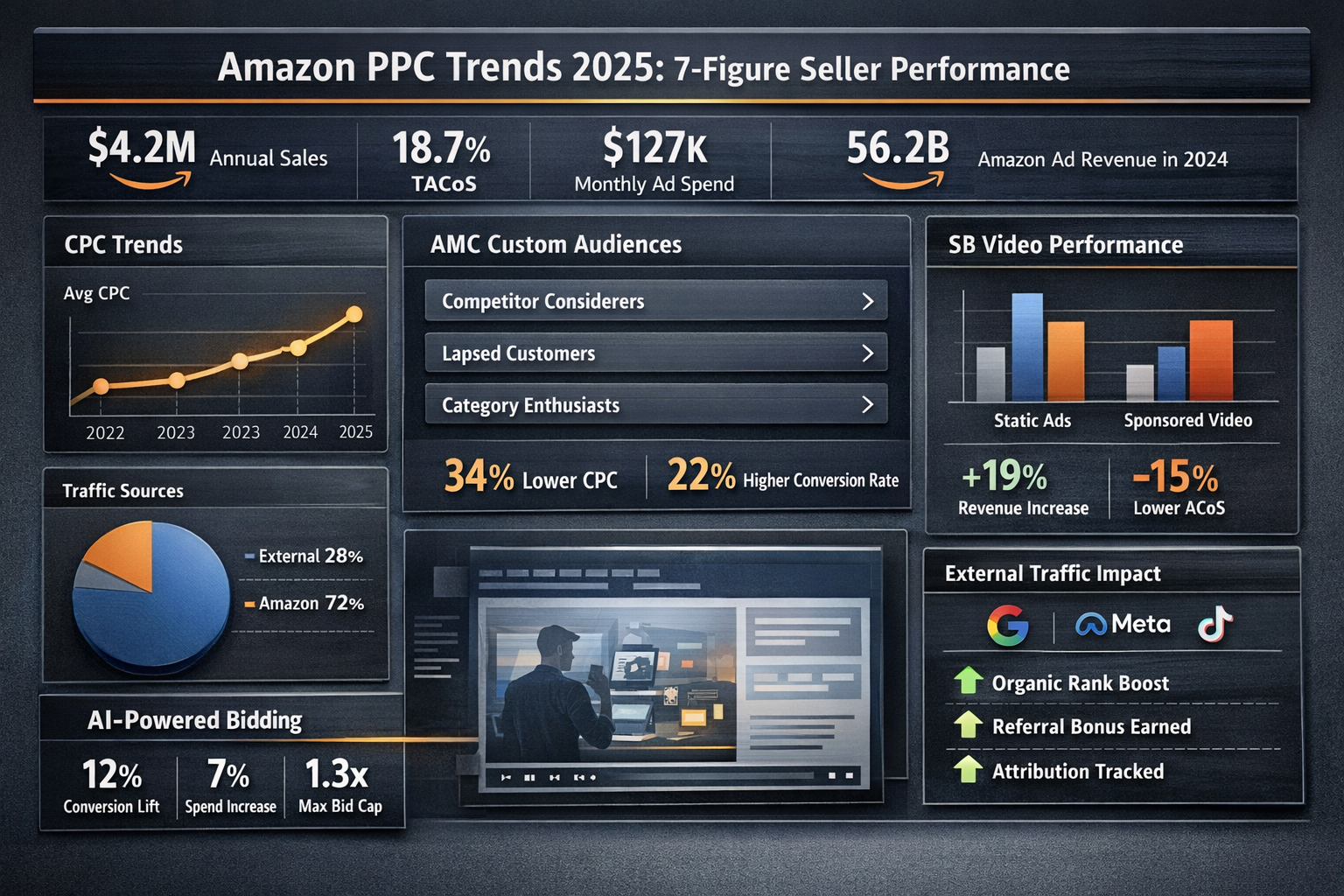
Last week I hopped on a call with a seller doing $4.2M annually. Smart operator. Solid margins. But he was still running the same campaign structure from 2022.
"Bernard, my TACoS keeps creeping up and I can't figure out why."
Here's why: Amazon's advertising platform has evolved dramatically, and if you're not leveraging the new tools, you're essentially bringing a flip phone to a smartphone fight.
The 2025 Amazon PPC landscape isn't just different—it's fundamentally more powerful for sellers who know how to use it. Amazon's advertising revenue hit $56.2 billion in 2024, growing 18% year-over-year [1]. That growth means Amazon is investing heavily in new features.
Features most sellers are ignoring completely.
I've spent the last three months testing these new capabilities across our managed accounts. Some flopped. Four stood out as genuine profit drivers for 7-figure sellers.
Let's break them down.
The 2025 Amazon Advertising Landscape: What's Actually Changed
Before diving into specific features, you need to understand the macro shifts reshaping Amazon PPC this year.
CPCs continue climbing. Across most categories, the cost to acquire a click has risen steadily since 2022. More sellers, more competition, same finite ad inventory.
Video is eating static. Amazon is aggressively expanding video placements across search results and product pages. Sellers not using video are competing with one hand tied behind their back.
Off-Amazon traffic matters more than ever. Amazon now rewards sellers who bring external shoppers to the platform. This isn't just a nice-to-have—it's becoming a competitive necessity.
Data access is democratizing. Tools that were once reserved for enterprise brands are now available to 7-figure sellers. The question is whether you'll use them.
I audited an account last month where the seller was spending $127k/month on Sponsored Products alone. Zero Sponsored Brands Video. Zero AMC audience utilization. Zero external traffic strategy. They were leaving money on the table while overpaying for basic keyword targeting.
Here's what's changed in 2025 that actually matters for your bottom line.
Strategy #1: Amazon Marketing Cloud (AMC) Custom Audiences
This is the big one.
Amazon Marketing Cloud has existed for a while, but 2025 brought expanded access and new audience-building capabilities that change everything for 7-figure sellers [2].
What AMC Custom Audiences Actually Do
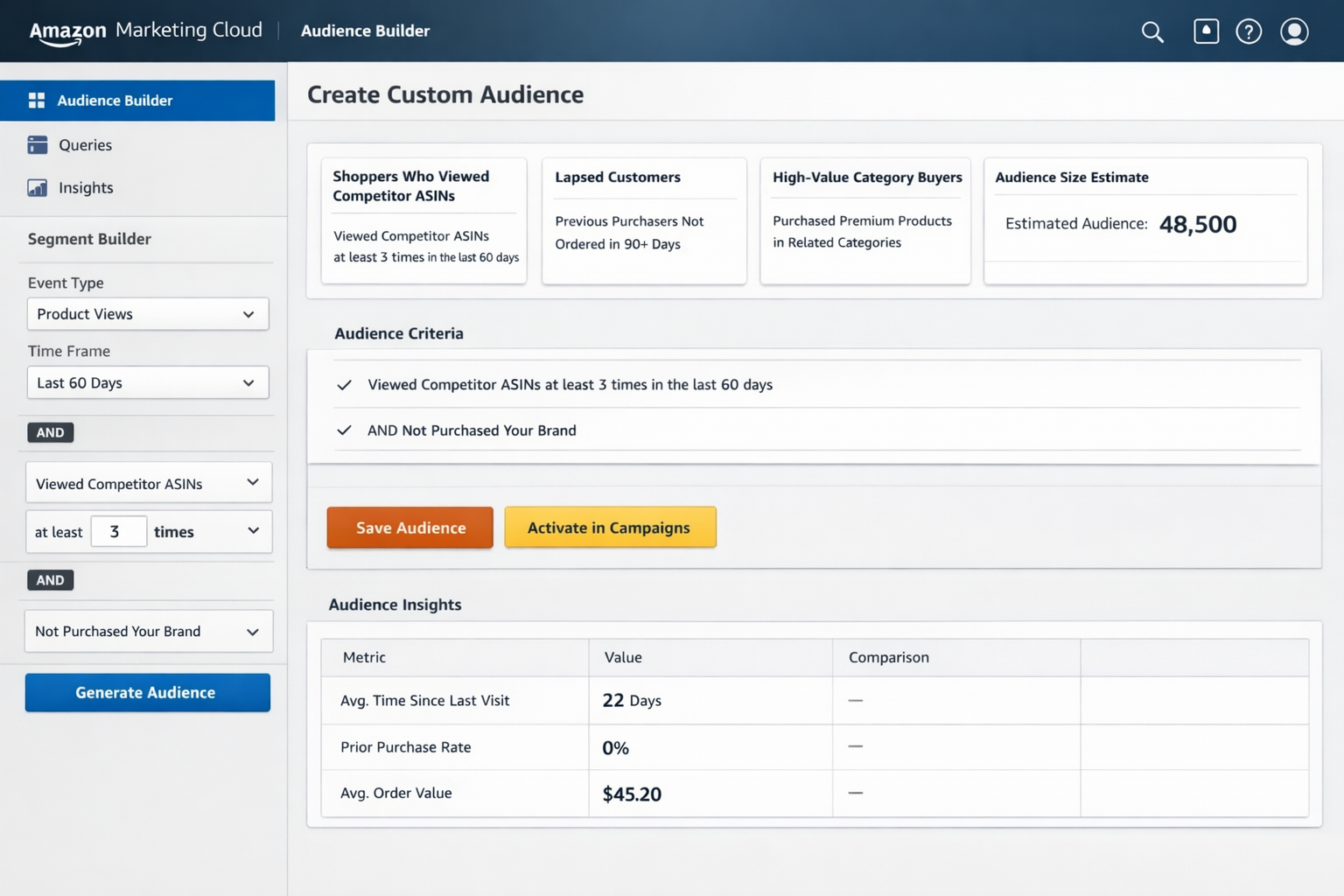
Think of AMC as Amazon's data clean room. It lets you build hyper-specific audience segments based on shopping behavior, then target those segments directly in your campaigns.
Previously, you could target broad categories. Now you can build audiences like:
Shoppers who viewed your competitor's ASIN three times but didn't purchase
Customers who bought from your category 90+ days ago (primed for repurchase)
High-value shoppers who purchased premium products in adjacent categories
This isn't theoretical.
I ran a test last month with a supplements brand doing $2.8M annually.
The setup: We built an AMC audience of shoppers who had purchased competing products in the last 60 days but never engaged with our client's brand.
The result: 34% lower CPC than their standard keyword campaigns. 22% higher conversion rate.
Why? Because we weren't paying to educate cold traffic. We were targeting people already in-market.
[IMAGE PLACEHOLDER: Screenshot of AMC audience builder interface showing custom segment creation options]
How to Test AMC Audiences (Profit-First Approach)
Don't go crazy building 47 audiences on day one. Start with these three:
Audience 1: Competitor Considerers
Build a segment of shoppers who viewed competitor ASINs in your category but didn't convert. These people are actively shopping. They just haven't found the right option yet.
Audience 2: Lapsed Customers
Target your own past purchasers who haven't reordered in 60-90 days (adjust based on your product's repurchase cycle). This is low-hanging fruit most sellers ignore.
Audience 3: Category Enthusiasts
Find shoppers who've made multiple purchases in your broader category. They're proven buyers, not window shoppers.
Guardrail: Set a strict budget cap for the first 14 days. Measure incremental sales, not just attributed sales. AMC audiences can sometimes cannibalize your existing campaigns if you're not careful.
The Profit Feedback Loop framework applies here: launch with intent, measure actual profit impact, then scale what works.
Strategy #2: Sponsored Brands Video Expansion
Sponsored Brands Video isn't new. But Amazon's 2025 expansion of placements and targeting options makes it a completely different animal.
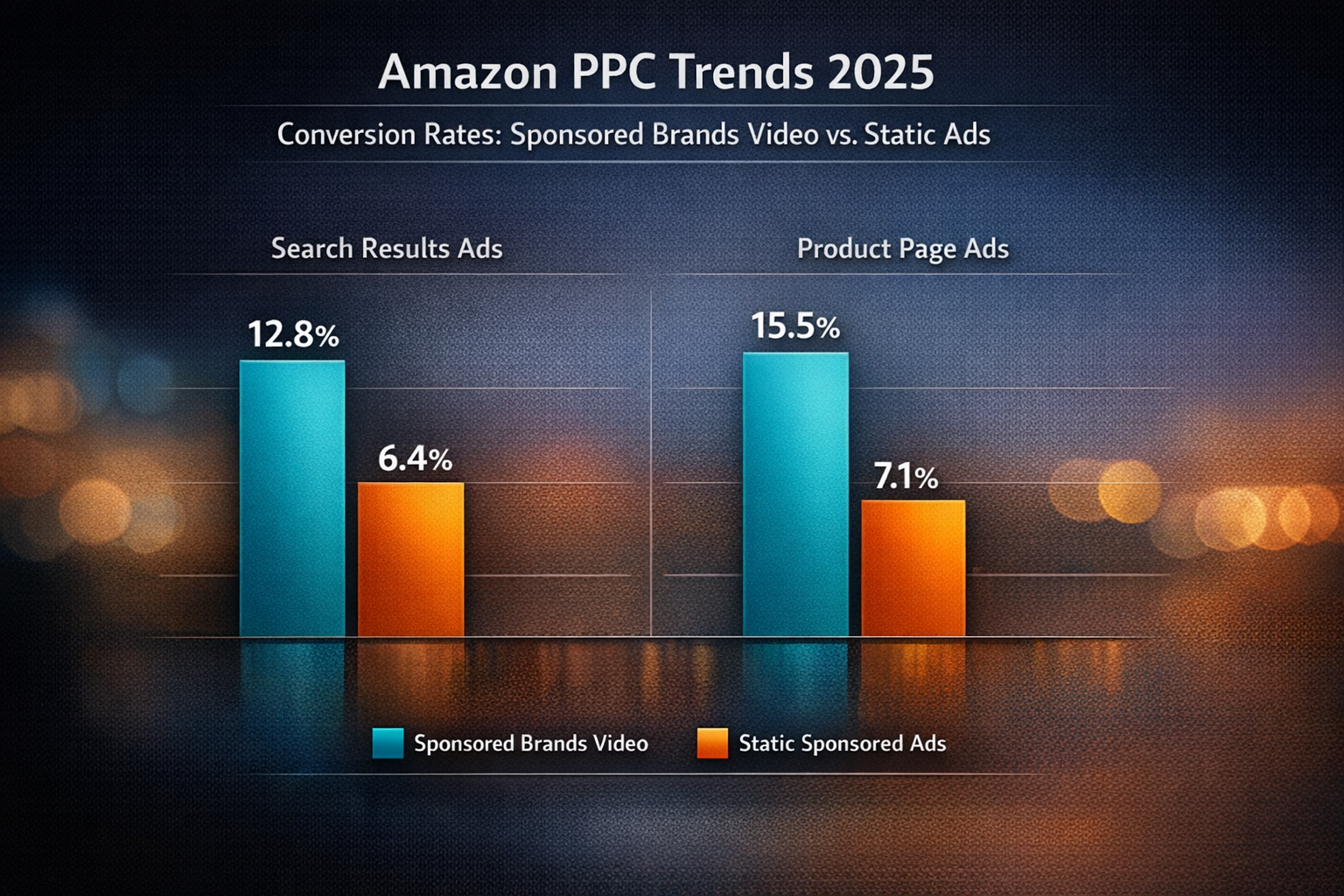
Here's what changed: SB Video now appears in more placements across search results and product detail pages. Amazon also introduced new creative formats and improved the video builder tool [3].
Why This Matters for 7-Figure Sellers
Video ads have historically delivered stronger engagement and conversion rates than static formats. The challenge was always production cost and placement limitations.
Those barriers are shrinking.
I tested expanded SB Video placements with a home goods brand last quarter. We used the same creative across the new placement options.
Before (Q4 2024): SB Video contributed 8% of total ad revenue
After (Q1 2025): SB Video contribution jumped to 19%—with a 15% lower ACoS than their Sponsored Products campaigns
The kicker? We didn't increase video spend proportionally. We just accessed more inventory.
[IMAGE PLACEHOLDER: Bar chart comparing SB Video conversion rates vs. static Sponsored Brands ads across placement types]
The Profit-First Video Testing Framework
Most sellers approach video ads backwards. They create expensive hero content, blast it everywhere, and pray for results.
Wrong.
Here's how to test SB Video expansion without lighting money on fire:
Step 1: Start with Ugly
Use Amazon's video builder or simple tools like Canva to create basic product showcase videos. Lifestyle footage is nice. But a clean product-on-white with benefit callouts often converts just as well for search-intent traffic.
Step 2: Test Placement Before Creative
Run the same video across multiple placement types. Let Amazon's algorithm show you where your audience converts. Then double down on winners.
Step 3: Measure Halo Effect
SB Video often lifts your organic ranking and Sponsored Products performance. Track your total TACoS, not just video campaign ACoS. If overall profitability improves, the video is working even if its direct ACoS looks higher.
Step 4: Set a Kill Switch
If a video campaign isn't showing positive signals within 21 days and $500+ spend, pause it. Reallocate that budget to what's working.
Need help identifying where your current campaigns are bleeding money? Grab the free Wasted Ad Spend Calculator and run your numbers before launching new initiatives.
Strategy #3: External Traffic and Amazon Attribution
Here's the trend most sellers are sleeping on: Amazon increasingly rewards brands that bring outside traffic to the platform.
Why does Amazon care? Because external traffic represents new customers they didn't have to pay to acquire. In return, Amazon gives you better organic visibility and access to powerful attribution data.
How External Traffic Impacts Your PPC Performance
When you drive traffic from Google, TikTok, Meta, or other platforms to your Amazon listings, several things happen:
Organic ranking boost. Amazon's algorithm favors listings that convert traffic from multiple sources. External conversions signal to Amazon that your product has broad appeal.
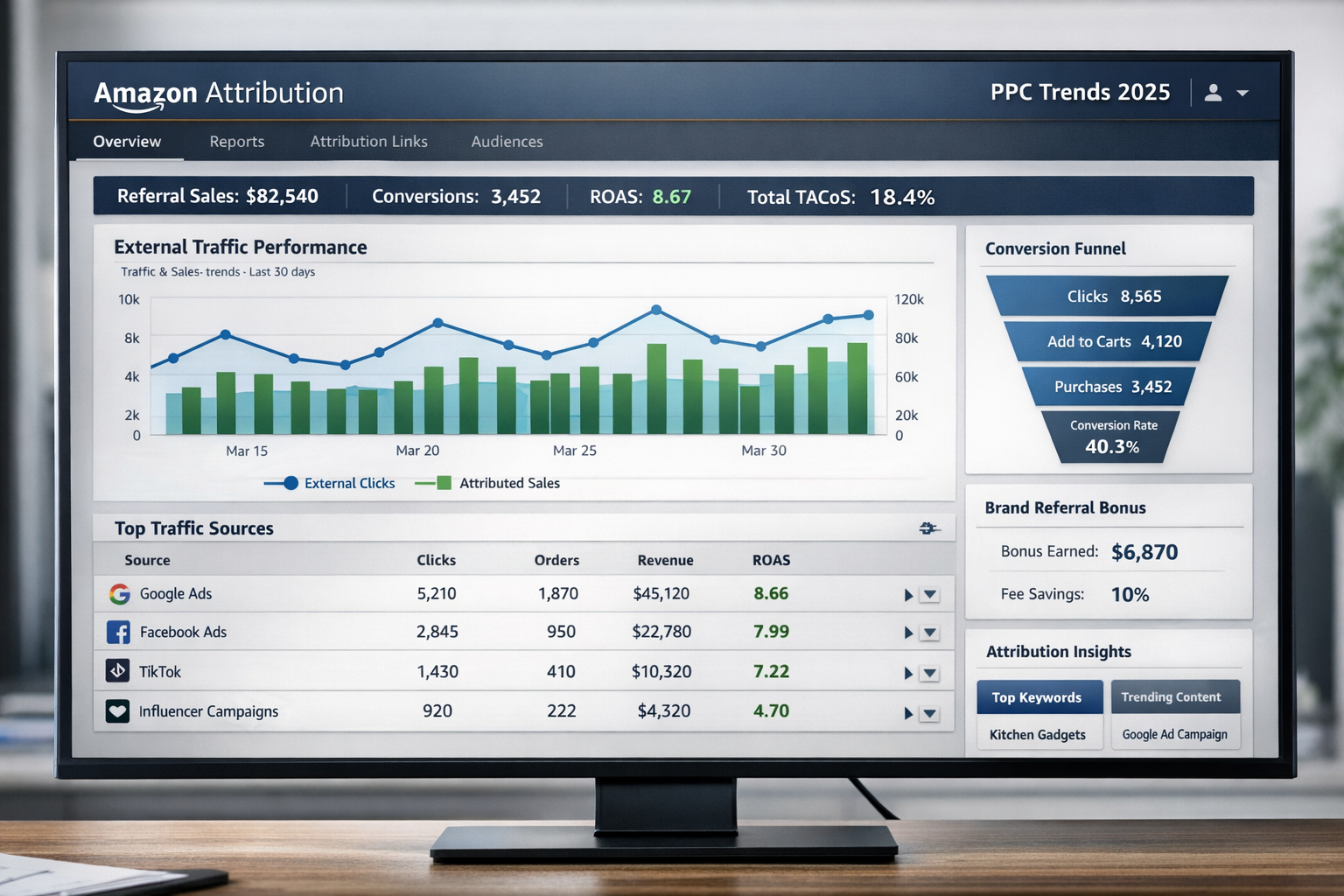
Brand Referral Bonus. Amazon offers a rebate on referral fees for sales driven by external traffic tracked through Amazon Attribution. That's money back in your pocket on every sale.
Audience data expansion. External traffic feeds into your AMC data, letting you build richer audience segments for retargeting.
I worked with a kitchen gadgets brand that started running targeted Google Shopping ads pointing to their Amazon listings. Within 60 days, their organic ranking improved for their top 5 keywords—and their overall TACoS dropped even though they were spending more on external ads.
The math worked because external traffic conversions have a multiplier effect.
How to Test External Traffic (Without Wasting Money)
Step 1: Set Up Amazon Attribution
This is free and takes about 20 minutes. Amazon Attribution lets you track which external channels drive sales so you're not flying blind [4].
Step 2: Start with One Channel
Don't try to master Google, Meta, and TikTok simultaneously. Pick the platform where your audience already exists. For most 7-figure sellers, that's Google Shopping or Meta.
Step 3: Target High-Intent Keywords
For Google, bid on product-specific and comparison keywords. For social, target audiences who've already shown purchase intent in your category. Don't waste money on pure awareness plays.
Step 4: Measure Total Impact
Track not just direct attributed sales, but changes in organic rank and overall TACoS. External traffic is an investment that compounds.
Guardrail: Set a test budget of $1,000-2,000 over 30 days. If you don't see movement in organic rank or TACoS improvement, pause and reassess your targeting.
Strategy #4: AI-Powered Campaign Recommendations and Automation
Amazon has significantly upgraded its AI-powered bidding and targeting recommendations for 2025 [4].
I know what you're thinking. "Bernard, I've seen Amazon's recommendations. They're trash."
Fair point. Amazon's suggested campaigns historically optimized for their revenue, not your profit.
But here's what's changed: the new recommendation engine incorporates more signals and gives you granular control over automation rules.
What's Actually Useful
Improved Bid Optimization
Amazon's AI now factors in time-of-day performance, competitor activity, and conversion probability more accurately. For high-volume campaigns, this can outperform manual bidding—if you set proper guardrails.
Targeting Expansion Suggestions
The platform now surfaces keyword and product targeting opportunities based on your conversion patterns, not just impressions. This is actually helpful for finding profitable long-tail terms.
Budget Allocation AI
New portfolio-level automation can shift budget between campaigns based on performance. Think of it as a basic version of what good agencies do manually.
How to Use AI Without Losing Control
Here's my framework for leveraging Amazon's AI without letting it tank your profitability:
Rule 1: Never Set and Forget
AI recommendations are a starting point, not a strategy. Review suggestions weekly. Accept what aligns with your profit targets. Reject the rest.
Rule 2: Use Automation for Scale, Not Strategy
Let AI handle bid adjustments within campaigns you've already validated manually. Don't let it launch new campaigns or add targeting without your approval.
Rule 3: Set Hard Limits
If you enable any automatic bidding, set maximum bid caps at 1.5x your target CPC. Amazon's AI will push bids higher if you let it.
Rule 4: Watch for Cannibalization
AI-suggested campaigns sometimes compete with your existing structure. Monitor search term overlap weekly. If two campaigns are fighting over the same terms, one needs to die.
I tested Amazon's enhanced bid automation on a pet supplies account. Results were mixed: 12% improvement in conversion efficiency, but a 7% increase in overall spend. Net positive, but only because we had guardrails in place.
Without limits, the AI would've happily spent an extra $15k/month chasing marginal conversions.
Putting It All Together: The 4-Strategy Implementation Plan
Theory is useless without execution.
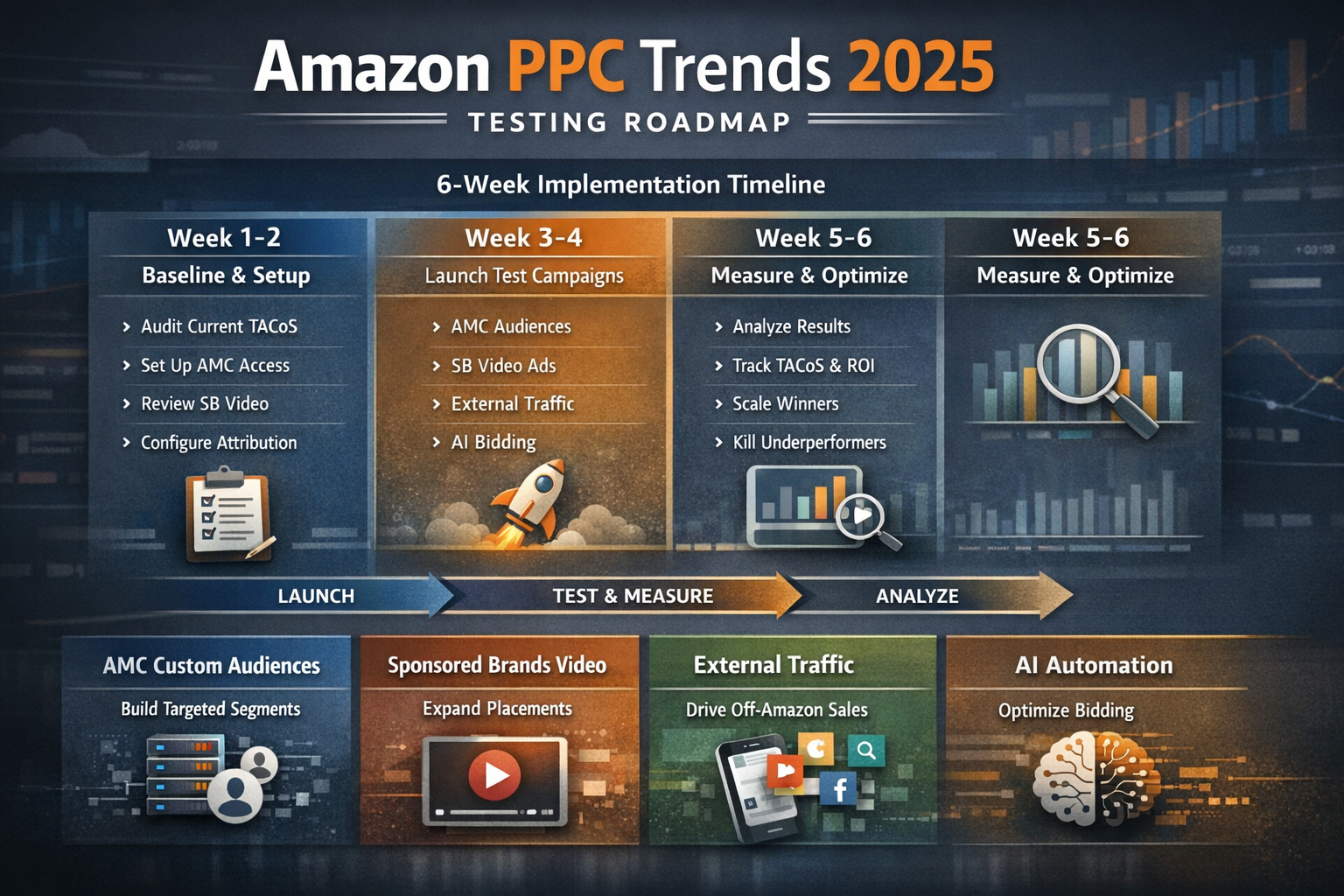
Here's exactly how to implement these four strategies within a profit-first framework:
Week 1-2: Baseline and Setup
Document your current TACoS, contribution margin, and profit per order
Set up AMC access if you don't have it (requires Brand Registry)
Audit your existing Sponsored Brands Video performance
Set up Amazon Attribution for external traffic tracking
Review Amazon's AI recommendations (but don't accept anything yet)
Week 3-4: Launch Test Campaigns
| Strategy | Test Action | Daily Budget | Duration |
| AMC Audiences | Build one competitor-considerer audience, launch SD campaign | $50 | 14 days |
| SB Video | Create one simple product video, enable expanded placements | $75 | 14 days |
| External Traffic | Launch Google Shopping or Meta campaign with Attribution | $50 | 21 days |
| AI Bidding | Enable bid optimization on top SP campaign with 1.3x cap | Existing | 14 days |
Week 5-6: Measure and Decide
Compare test campaign ACoS/ROAS against your baselines
Calculate incremental profit (not just revenue)
Measure changes in organic rank and total TACoS
Kill underperformers. Scale winners.
Document learnings for your team
This isn't complicated. But it requires discipline.
Most sellers won't do this. They'll read about these features, think "that sounds cool," and go back to fighting fires in their existing campaigns.
That's fine. Less competition for the sellers who actually execute.
What These Trends Mean for Your Exit Strategy
If you're planning an exit in the next 12-24 months, pay attention.
Acquirers are getting smarter. They're not just looking at topline revenue—they're scrutinizing your advertising efficiency and scalability.
A business with:
Sophisticated audience targeting (AMC)
Diversified ad placements (SB Video)
External traffic capabilities (Attribution)
Documented optimization processes (AI guardrails)
...commands a higher multiple than one running the same basic SP campaigns from three years ago.
Your PPC structure is part of your business's asset value. Treat it that way.
Ready to Implement These 2025 Amazon PPC Strategies?
Look, you can take this article and run with it yourself. The frameworks are all here.
But if you're doing $1M+ and don't have time to run these tests while managing everything else in your business, let's talk.
We implement the Profit Feedback Loop across every account we manage. That means these new features get tested systematically, measured against profit (not vanity metrics), and scaled only when they prove themselves.
Book a free strategy call and we'll map out exactly how to implement these four strategies for your specific account.
No pitch fest. Just a 30-minute conversation about what's actually working in 2025 and whether we're a fit to help.
Frequently Asked Questions
What is Amazon Marketing Cloud and do I need it?
Amazon Marketing Cloud is a data clean room that lets you build custom audiences based on shopping behavior and measure cross-channel impact. If you're doing $1M+ annually and have Brand Registry, you should be using it. The custom audience capabilities alone can reduce CPCs significantly by targeting shoppers who are already in-market for your category rather than paying to educate cold traffic.
Are Sponsored Brands Video ads worth the investment for Amazon sellers?
For 7-figure sellers, absolutely. The 2025 placement expansion means your videos reach more shoppers across the shopping journey. Start with simple product showcase videos—you don't need expensive production. Test placements first, optimize creative second. Most accounts I audit are under-allocated to video relative to its profit potential.
How does external traffic improve my Amazon PPC performance?
External traffic from Google, Meta, or TikTok signals to Amazon that your product has broad appeal, which can boost organic ranking. Plus, Amazon's Brand Referral Bonus gives you a rebate on referral fees for attributed external sales. The combination of better organic visibility and fee savings often improves total TACoS even when you're spending more overall.
Should I trust Amazon's AI bidding recommendations?
Partially. Amazon's 2025 AI improvements are genuinely better at optimizing for conversions. But never use them without guardrails. Set bid caps, review recommendations weekly, and monitor for cannibalization. The AI optimizes for Amazon's goals by default—your job is to constrain it toward your profit targets.
What's the biggest mistake sellers make with new Amazon PPC features?
Testing too many things at once without proper measurement. Pick one feature, set a controlled budget, run it for 14-21 days, and measure against a clear baseline. Then decide: scale, iterate, or kill. Most sellers launch everything simultaneously and have no idea what's actually working.
About PPC Maestro
PPC Maestro specializes in profit-first Amazon PPC management for 7-figure private label sellers. Founded by Bernard Nader, our approach centers on the Profit Feedback Loop framework—cutting wasted spend, reallocating to winners, and protecting contribution margin. We've managed millions in ad spend across hundreds of accounts, and our case studies consistently show profit improvements within the first 30-60 days. Bernard regularly shares PPC strategies through his YouTube channel, speaking engagements at Amazon seller events, and detailed SOPs available on our website.
Works Cited
[1] Amazon — "Amazon.com Announces Fourth Quarter Results." https://ir.aboutamazon.com/news-release/news-release-details/2025/Amazon.com-Announces-Fourth-Quarter-Results/
[2] Amazon Advertising — "Amazon Marketing Cloud." https://advertising.amazon.com/solutions/products/amazon-marketing-cloud
[3] Amazon Advertising — "Sponsored Brands Video." https://advertising.amazon.com/solutions/products/sponsored-brands
[4] Amazon Advertising — "Amazon Ads Campaign Optimization." https://advertising.amazon.com/library/guides/amazon-ppc-optimization